
To find barber jobs in nearby locations, open your BarberRise city or region hub and use its nearby locations links to see chairs in neighbouring suburbs and towns. Then set a realistic travel limit, compare pay, chair type and verified credentials side by side, and add a job alert for those areas.
If your home suburb has two open chairs and neither suits you, settling is not the only answer. The better move is to widen the search sensibly. I have spent ten years in the trade and managed three shops, and I have seen good barbers stay in a poor chair because the better one looked too far away. I have also seen shops lose strong barbers to a chair two suburbs over.
This guide shows barbers how to use the nearby locations links on BarberRise hubs to search outward without trawling a general board. It also gives shop owners in outer suburbs and regional towns a short section on hiring beyond their own postcode. BarberRise is built only for barbers and barbershops. We are not Seek. We are not Indeed.
Key Takeaways
- Nearby locations links on each BarberRise city or region hub take you to listings in neighbouring suburbs and towns, one step at a time.
- Set your radius by door-to-door travel time on your worst shift, not by kilometres on a map.
- Compare chairs in this order: pay shown up front, chair type, verified credentials, then commute.
- A nearby town can beat the city on competition for chairs, loyal local clientele and walk-in traffic, but check the shop's book first.
- Shop owners get seen by barbers in surrounding suburbs when pay is clear and workplace photos look real.
- Pair every nearby search with a job alert so new chairs reach you before the open market sees them.
Built only for barbers and barbershops
Barbers: tell us where you want to cut and when, and shops see you first. Shops: post a role free, and your first placement is free as a founding shop.
Get startedSummary Table
| Step | What you do | What to check | Why it matters |
|---|---|---|---|
| 1. Find the hub | Open your city or region hub and scan the nearby locations links | Which neighbouring suburbs and towns are linked | Gives you a structured way to widen your search |
| 2. Set your radius | Decide your longest acceptable door-to-door trip | Early opens, late closes, weekend trading, parking, public transport | Stops you applying for chairs you will resent in a month |
| 3. Compare chairs | Line up listings side by side | Pay, chair type, verified credentials, workplace photos | Makes different offers comparable |
| 4. Weigh town vs city | Judge competition, clientele and walk-ins | Size of the local client base, shop's book, ceiling on pricing | A nearby town can beat the city, but not always |
| 5. Set alerts | Add alerts for each area inside your radius | Chair types and pay floor you will accept | New chairs reach you first |
What 'Nearby Locations' Means on a BarberRise Hub
On BarberRise, nearby locations are links on each city or region hub page that lead to listings in neighbouring suburbs and towns. They let you move outward from your home area one step at a time. Every listing carries the same details, so you compare like with like instead of scrolling one long board.
Start at the Barber Jobs in Australia hub, open the city or region closest to you, and look for the nearby locations links. Each one leads to a page of chairs in that area. If you live on the Gold Coast and see little near you, you can step out to the next suburb or town and see what is open there, without losing the thread of your search.
This is where a trade-only platform earns its keep. A general board treats a barber role as one listing among every other trade. On BarberRise, every listing is a chair, and each one is written for barbers. That is what I mean by only barbers, only barbershops.
It also fits how the platform works. Our "Three steps. Both sides." flow is: create your profile, post or browse, connect and work. Nearby locations sit inside the browse step. You are not starting again each time you look at a new suburb. Your profile, with portfolio and experience, travels with you.
Setting Your Realistic Radius

Set your radius by travel time, not kilometres. Work out the longest door-to-door trip you would accept on your worst shift, usually the early open or the late close, and include parking or public transport. A chair inside that limit is a real option. A chair outside it is a daydream.
Kilometres lie. Ten kilometres across a suburban grid at 6am is a different trip from ten kilometres through school-zone traffic at 8:30am. Always test the route at the time you would actually travel.
Travel time, parking and public transport
If you drive, ask where you will park and whether it is free, time-limited or paid. A shop on a busy main street may have no parking for staff, and a daily parking cost is a quiet pay cut. If you use public transport, check the first and last services on the days you would work. Many barbers forget that a late close can finish after the last train or bus.
Travel from home to your regular workplace is generally treated as private by the Australian Taxation Office, so do not assume you can claim it. Speak to your accountant before you build a budget around a deduction.
Early, late and weekend shifts
I have run the 6am opens at Black Sheep Barbershop on the Gold Coast. They are fine when the chair is five minutes away. They are brutal when it is forty. If a shop opens early, add that to your trial of the commute, not just the average day.
Weekends matter too. For most barbers, Saturday is a core trading day, so test the trip on a Saturday as well as a Tuesday. If you are an employee, check how late and weekend work is paid under your award or contract. The Fair Work Ombudsman publishes pay guides, and the Hair and Beauty Industry Award is the one to check for whether it covers your role. If you are renting a chair, there is no award rate to lean on. Your travel is entirely your cost.
Comparing Nearby Chairs Side by Side
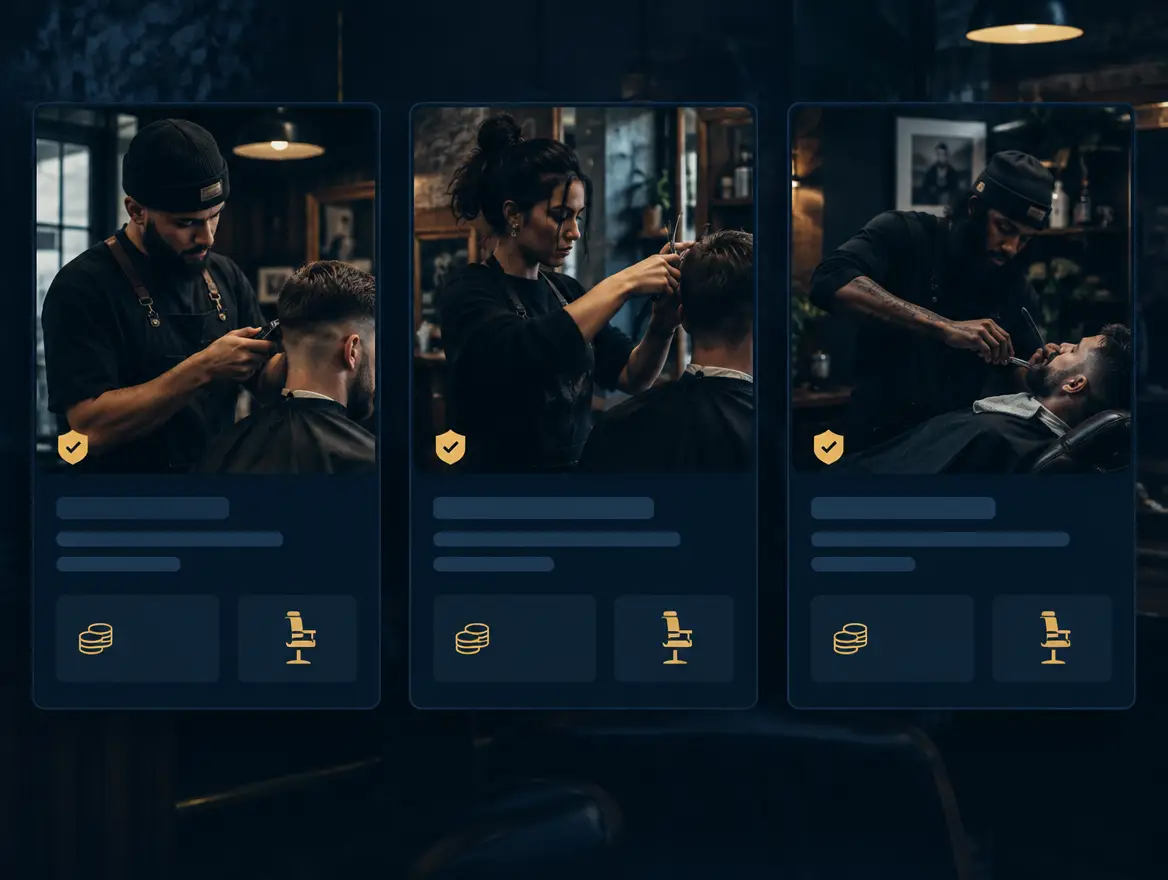
Compare nearby chairs on three things in order: the pay shown up front, the chair type, and whether credentials are verified. Only then weigh the commute. A higher rate on a short-cover chair is not the same offer as a lower rate on a full-time one, so put each on the same footing first.
Pay shown up front
On BarberRise, pay is shown on the listing. That is deliberate. Hunting through DMs and Facebook groups to find out what a chair actually pays wastes the time of both sides. When you can see the number, you can do the maths on whether the extra travel is worth it. For context, our guides on local salary benchmarks for barbers and on commission and benefits explain how to read what you are being offered.
Here is a simple test. Take the pay on the nearby chair, subtract what you would earn at your best local option, then subtract the travel costs and the value of the unpaid time on the road. If the number is still clearly positive, the chair is worth chasing. If it is thin, the commute is eating your raise.
The type of chair
BarberRise supports five placement types, and each one changes how far you should be willing to travel:
- Full-time: steady hours and a regular commute. Worth a longer trip if the pay and culture are right, because you do it every week.
- Trial-to-permanent: a trial period that can lead to a permanent role. Test the commute during the trial, not after.
- Rostered: set shifts on a roster. Check which days and times you will actually travel.
- Short cover: temporary cover for a gap. Usually only worth a longer trip if the pay is strong, since you are not building a routine.
- Rent-a-chair: you rent the chair and run your own book. Distance matters most here, because your clients have to be able to reach you too.
Verified credentials and the shop behind the chair
Credentials are checked before a profile shows as verified, so shops see barbers who are ready for the chair, and you can expect the same seriousness from the shop. Look at the employer profile and the workplace photos. A shop that shows its space, its stations and its team has made an effort to be seen. If you are weighing two chairs, the one that lets you see where you will stand is usually the lower-risk trip.
When a Nearby Town Beats the City
A nearby town can beat the city when competition for chairs is lower, the clientele is loyal and walk-ins arrive without long waits. In the right shop you build a full book sooner. The catch is a smaller client base, so check how busy the chair really is before you commit.
There are three logical reasons the smaller market can work in your favour.
Lower competition for chairs. In a city hub, a good listing draws many applicants. In a smaller town, fewer barbers are looking, so a well-presented profile stands out. That is a reasoning point, not a statistic, and it will not hold in every town.
A loyal local clientele. Regional and outer-suburb shops often serve the same families and tradespeople for years. If you do consistent work, those clients tend to stay with you, which makes a book easier to protect.
Shorter waits for walk-ins. Where a shop takes walk-ins, a quiet-ish town means a client sits down quickly and the chair is rarely empty. A full shop runs itself. An empty chair runs you.
Now the caveats. A smaller town has a smaller pool of clients, which can cap how much you can charge or how fast you can grow. Weekdays can be quieter. Ask to see the shop's appointment pattern, and ask how new barbers are given clients. If you are searching for regional barber jobs near a city, this is the check that separates a good move from a long drive to a half-empty chair.
A town shop can also be lonelier. Skills get you started. A community gets you further. If you are moving out of a busy city shop, plan how you will keep learning and stay connected, whether through the BarberRise community and education tiers or the people you already know in the trade.
For Shop Owners: Hiring Beyond Your Own Postcode
Barbers in surrounding suburbs see your role because it appears through the nearby locations links of neighbouring hubs, not only your own. They are willing to travel when pay is clear and the workplace looks real. Show pay up front, add workplace photos and name the chair type.
If you run a shop in an outer suburb or regional town, your local pool is limited by geography. Hiring barbers from nearby towns widens it without asking anyone to relocate. A barber who lives twenty minutes away is a realistic hire. They just need a reason to choose you over the chair closer to home.
I learned this the hard way. In one of the shops I managed, we lost a strong barber to a chair two suburbs over. It was not the distance that moved them. The other shop showed its pay clearly, and ours did not. They were willing to drive further for certainty.
So make it easy to say yes:
- Show the pay. Put the number on the listing. Barbers filter by it.
- Add workplace photos. Barbers want to see the space, the stations and the vibe before they drive there. Your employer profile does this work for you.
- Name the chair type. Full-time, trial-to-permanent, rostered, short cover or rent-a-chair. Be specific, and hire your way.
- State your hours. Early opens and Saturday trading are things a barber will weigh against their commute.
The cost side is simple. Posting a role is free. The agency commission on a placement is 0%, and it is never a percentage of wages. Founding shops get their first placement free. Roles go straight to barbers already screened for the chair, so you are not sifting through unscreened applicants from a general board, and applications arrive with portfolio and experience attached.
Pairing Nearby Searches With Job Alerts
Set a job alert for each surrounding suburb or town inside your realistic radius, not just your home suburb. New chairs then reach you as they are posted, so you can apply before the role fills. The barber who sees a good chair first has the advantage.
A manual search is a snapshot. A job alert is a standing search. If you only check once a week, you will miss the chairs that go quickly, and the best-paid or best-run shops tend to fill fast.
Here is a sensible setup:
- Pick your areas. Use the nearby locations links to list every suburb or town inside your travel-time limit.
- Choose your chair types. If you will only take full-time or trial-to-permanent, say so. If you are open to short cover, include it.
- Set a pay floor. Use what you know from local benchmarks so alerts are not flooded with chairs you would never take.
- Review monthly. If nothing fits, widen the radius by one step. If too much arrives, tighten it.
This is how a nearby search stops being a weekend chore and becomes part of how you manage your career. Find your chair, then let the right ones find you.
Why Distance Is Rarely the Real Reason Barbers Move
My view is blunt: barbers rarely leave a chair over distance alone. They leave over unclear pay, unclear expectations and a shop they cannot picture. Distance is a price a barber will pay when the rest is visible. That is the lesson from the barber I lost to a chair two suburbs over.
That is why I do not treat commute as a fixed rule. I treat it as a price. A barber will pay a longer drive for a clear number, a clear chair type and a workplace they have seen. They will refuse a shorter drive to a listing that hides everything.
I have seen the other side too. At one point I ran an academy inside my Canadian shops and trained barbers from scratch. Within months, many of those staff were poached. The economics of training people who then walk to another chair shaped how I think about retention. If a shop wants to keep people, it has to compete on clarity and respect, not just proximity.
When I built BarberRise inside Black Sheep Barbershop, it was because I was tired of hunting through Facebook groups, DMs and generic boards while trying to keep every chair filled. Nearby locations exist for the same reason. They let barbers and shops find each other across suburb lines, with the details already on the page.
There is also a career point. A long commute every day is a slow tax on your body and your time. A career behind the chair, not just a grind, means choosing a chair you can still do in year fifteen. Education that outlasts hustle culture covers ergonomics, health and business skills for that reason.
Your next step. Barbers: open your city hub, explore the nearby locations links and set a job alert for surrounding suburbs. Shop owners: post your role free, with pay shown up front, and reach barbers already screened for the chair. Rise together.
References
- Fair Work Ombudsman, Minimum wages and pay guides
- Fair Work Commission, Modern awards (including the Hair and Beauty Industry Award)
- Australian Taxation Office, Work-related expenses and deductions
Frequently asked questions
How far should a barber travel for a job?
There is no single right distance. Use door-to-door travel time on your worst shift, usually an early open or late close, and include parking or public transport. If the trip is one you can repeat every week without resenting it, the chair is inside your radius.
How do I find barber jobs near me on BarberRise?
Open your city or region hub from the Barber Jobs in Australia page and look for the nearby locations links. Each link shows listings in a neighbouring suburb or town. Then set a job alert for those areas so new chairs reach you as they are posted.
Is a regional barber job near a city worth it compared with a city chair?
It can be. Smaller towns often mean less competition for chairs, loyal local clientele and quicker walk-ins. The trade-off is a smaller client base and quieter days. Ask the shop how busy the chair is before you commit.
Do employers pay for travel between home and work?
Generally not. Ordinary travel from home to your workplace is usually your own cost, and the ATO treats it as private. Check your contract or the relevant award, and speak to an accountant about your situation. If you rent a chair, travel is always your cost.
What does it cost a shop to hire barbers from nearby towns on BarberRise?
Posting a role is free. The agency commission on a placement is 0% and is never a percentage of wages. Founding shops also get their first placement free.
Can shop owners reach barbers outside their own suburb?
Yes. Barbers searching neighbouring suburbs and towns can see your role through nearby locations links. Clear pay, a named chair type and workplace photos make barbers more willing to travel to you.
Find a chair near you
Every city, by state: barber jobs in Australia and hairdressing jobs in Australia. Pay floors and how each pay structure works: what barbers get paid.

BarberRise
The team building Australia's job platform for barbers and barbershops.
Keep reading
state-level barber job hubs
Moving Interstate as a Barber: How to Use State-Level Barber Job Hubs to Compare Chairs Before You Relocate
19 min read
barber job alerts
Barber Job Alerts: How to Hear About the Right Chair First in Australia
17 min read
job expiry date
Barber Job Expiry Dates: How Long Listings Stay Live and Why It Matters for Barbers and Shops
18 min read