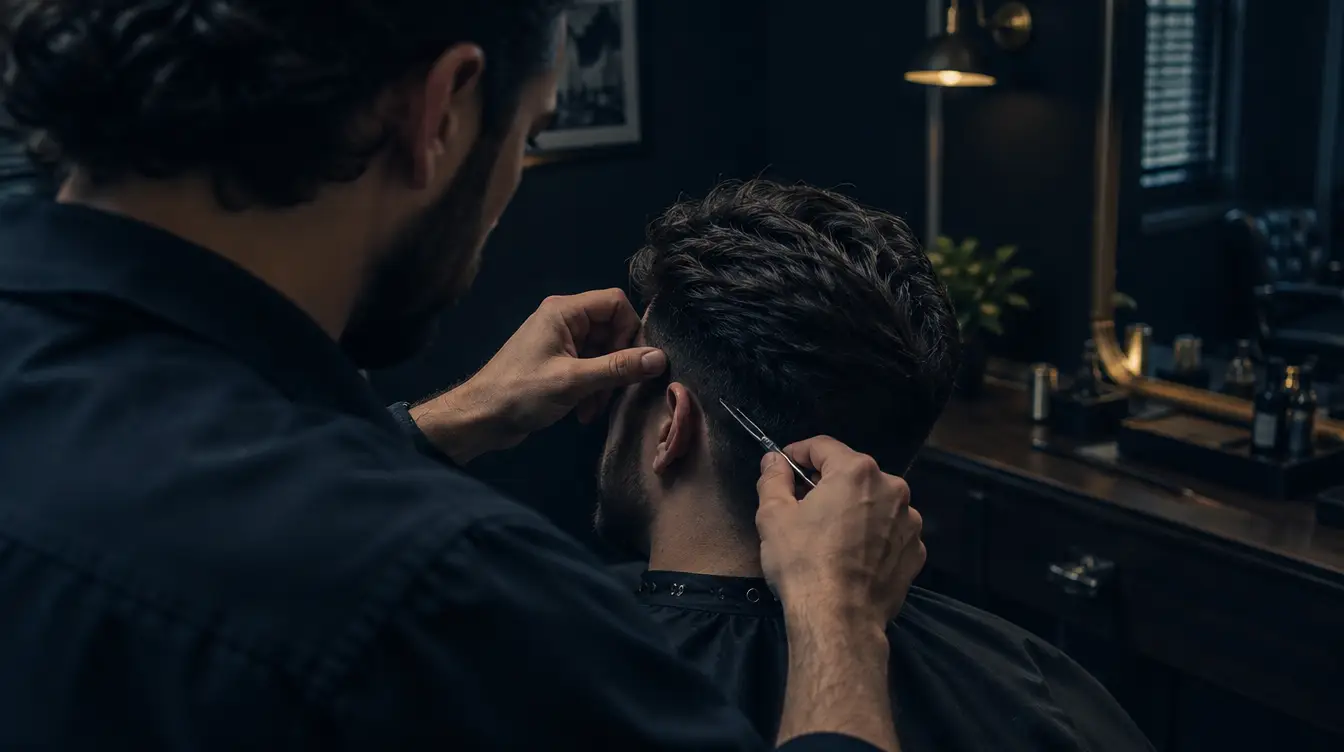
A men's hair system job is a barbering role built around non-surgical hair replacement: consulting, fitting, bonding, cutting the unit in, and running maintenance appointments. Barbers find these chairs by searching trade-specific boards, filtering by specialty skill and setting alerts, because generic job boards bury them under "hairdresser" or "sales".
Search this phrase on a general job board and you will see salon receptionists, junior stylists and retail advisers. The specialist chair you actually want sits somewhere underneath, if it is listed at all. I have spent ten years in the trade and managed three shops, and I have watched good specialist talent get lost on boards that were never built to understand a chair-based role.
This guide is for two people. The first is the barber with solid clipper and blending skills who is weighing up hair systems as a specialty. The second is the shop owner who offers, or is about to launch, hair system services and needs someone who can deliver them. By the end you will know what the job involves, what shops screen for, which chair types exist, how to think about pay, and where both sides can find each other.
Key Takeaways
- A hair system role covers the whole client journey: consultation, fitting, bonding, cutting in and ongoing maintenance, not just one clever service.
- Shops screen hardest for fading and blending, detail scissor work, safe adhesive handling and client confidentiality.
- Hair system chairs come as full-time, trial-to-permanent, part-time or rostered, and as dedicated studios or add-on services inside a barbershop.
- A specialty strengthens your negotiation, but only if the role shows pay up front and you can evidence the skill.
- On BarberRise, posting a role is free, agency commission is 0% (never a percentage of wages), and the first placement is free for founding shops.
Built only for barbers and barbershops
Barbers: tell us where you want to cut and when, and shops see you first. Shops: post a role free, and your first placement is free as a founding shop.
Get startedSummary: Hair System Roles at a Glance
| Topic | What the barber should know | What the shop should know |
|---|---|---|
| The work | Consult, fit, bond, cut in, maintain | You are hiring for a repeat-client service, not a one-off cut |
| Core skills | Fading, blending, detail scissor work, adhesive safety | Test blending and handling in a working trial |
| Chair types | Full-time, trial-to-perm, part-time, rostered, rent-a-chair | Match the chair type to your service volume |
| Pay | Look for roles that show pay up front | Showing pay attracts serious applicants |
| Discretion | Confidentiality is part of the product | Treat privacy as a hiring criterion |
| Where to look | City hubs, skill filters, job alerts | Post on a board where barbers are already screened |
What a Men's Hair System Job Actually Involves
A men's hair system job covers the full client relationship: an honest consultation, selecting and fitting a unit, attaching it, cutting it into the client's own hair, and booking regular maintenance. It is a service business inside a barbershop, and the repeat appointments are the point.
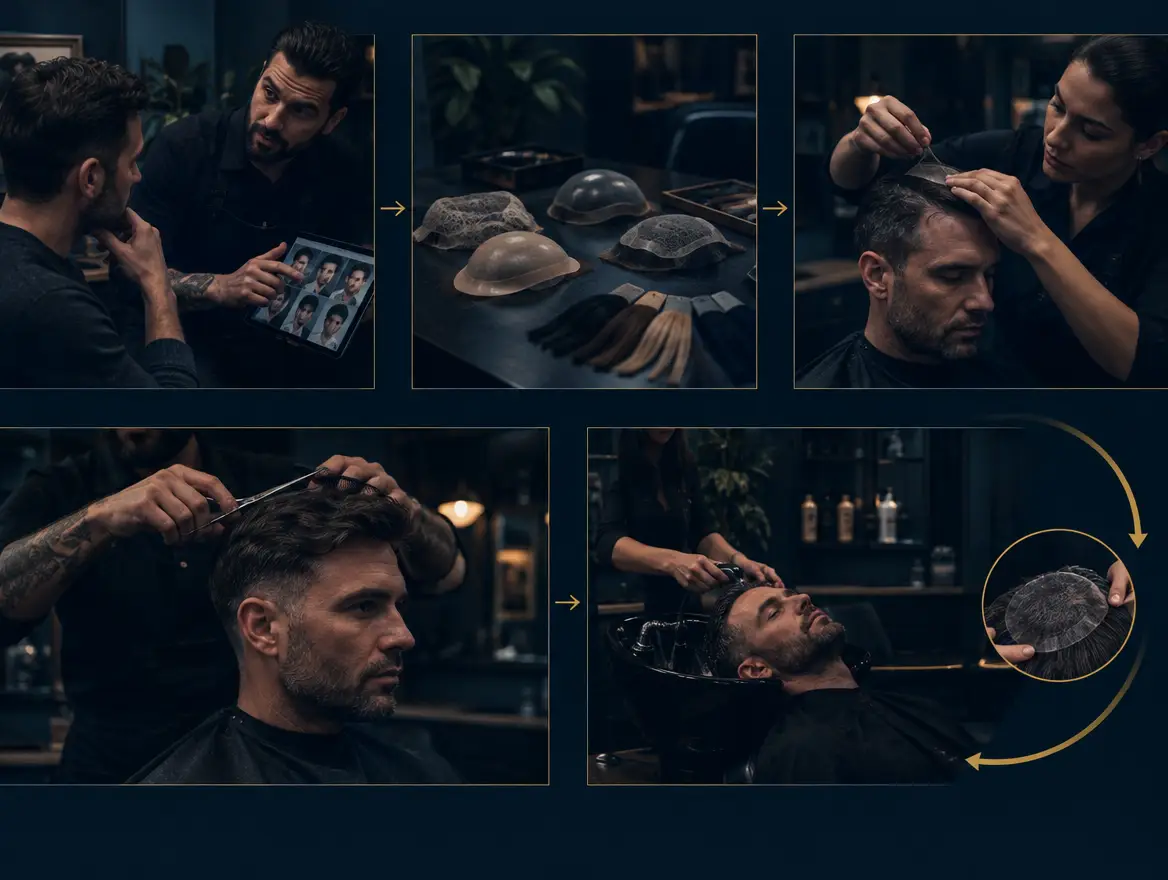
Most barbers see the cut and the fade. A hair system client sees a decision they may have put off for years. That changes how you work.
The consultation
The consultation sets the whole relationship. You assess the client's existing hair, the areas of loss, his lifestyle and his expectations. You explain what a system can and cannot do, and you do not oversell. A client who feels pushed will not come back for maintenance, and maintenance is where the long-term chair is built.
Good consultations are slow and private. If your shop floor is loud and open, the role will need a quieter space or a quieter time of day.
Base types and what they mean for the chair
Hair systems are built on different bases, commonly lace, thin skin or poly, and combinations of the two. Each behaves differently. Some look more natural at the hairline, some are more durable, some breathe better. As the barber, you are not manufacturing the unit, but you need to understand what you are fitting, how it will sit, and how it will age. Clients will ask. A vague answer costs trust.
Tape and bonding
Attachment is usually by tape or by liquid bonding adhesive. Each has its own application method, removal process and skin considerations. This is hands-on technical work with products that touch skin, so patch testing, clean technique and clear aftercare instructions matter. Shops want to know you treat adhesives as a controlled product, not a casual one.
Blending the unit into natural hair
This is where a clipper barber's craft shows. The edge of the system has to disappear into the client's own hair. You cut the unit in, taper the sides, soften the front and match texture and length. A poor blend is visible across a room. A good one is invisible even to the client's partner, which is exactly what many clients are paying for.
Maintenance appointments
A system is not a one-visit service. Units are removed, cleaned, reattached and re-cut on a schedule that depends on the system, the adhesive, the client's skin and his lifestyle. That recurring rhythm is what makes this specialty attractive to shops and barbers alike: predictable, rebooking clients who value a chair they trust.
Discretion
Many clients do not want anyone to know. That makes confidentiality part of the product. You do not discuss clients, you do not photograph without clear permission, and you do not let a chatty front desk undo your work. In Australia, shops handling client details also have obligations under the Privacy Act, so it pays to know the basics (the Office of the Australian Information Commissioner publishes plain-English guidance).
What Skills Do Shops Screen For in a Hair System Barber?
Shops screen for four things: fading and blending, detail scissor work, safe adhesive handling and confidentiality. Technical skill gets you the trial. Judgement and discretion get you the permanent chair. If you can show all four, you are a rare candidate in most Australian cities.
Fading and blending
Everything else rests on this. A hair system lives or dies at the join between synthetic or human hair and the client's own. Shops want to see tight, clean tapers and a sense of how to soften a line rather than just cut one. If you are still building this base, the specialty skill pages for fades on BarberRise are the right place to benchmark yourself, and a strong fade portfolio is the first thing a hiring shop will ask for.
Detail scissor work
Clippers do the heavy lifting. Scissors finish the job. Cutting a unit in often means point cutting, texturising and fine adjustments around the hairline, temples and crown. Barbers who only run clippers hit a ceiling here. Detail scissor work is the difference between a unit that looks fitted and one that looks placed.
A related skill is beard sculpting. Many hair system clients also want beard shape and density matched to the head, so a barber who can do both is more useful to a shop than one who can do only one.
Safe adhesive handling
Adhesives, removers and cleaning products are chemicals. Employers have duties around hazardous chemicals, and Safe Work Australia publishes guidance on managing them. A good candidate reads labels and safety data sheets, ventilates the space, protects skin and can explain the process to a client without hesitation. Shops should ask about this directly. Barbers should be ready to answer.
Client confidentiality
This is a screening criterion, not a nice-to-have. Shop owners should ask how you handle a client who bumps into a friend in the waiting area, or how you store photos. Barbers should show they have thought about it.
Evidence beats claims
I make no claims here about formal accreditation, and I would be wary of anyone who does without naming the body. Training pathways vary and shops weigh them differently. What every shop can use is evidence: a portfolio of before and after work, a working trial and references. On BarberRise, applications arrive with portfolio and experience attached, and credentials are checked before a profile shows as verified.
What Types of Chair Exist for Hair System Barbers?
Hair system chairs come as full-time, trial-to-permanent, part-time or rostered roles, and as rent-a-chair arrangements. They sit either in dedicated hair replacement studios or in barbershops adding the service. The right one depends on how much you want to commit and how much client volume the shop already has.
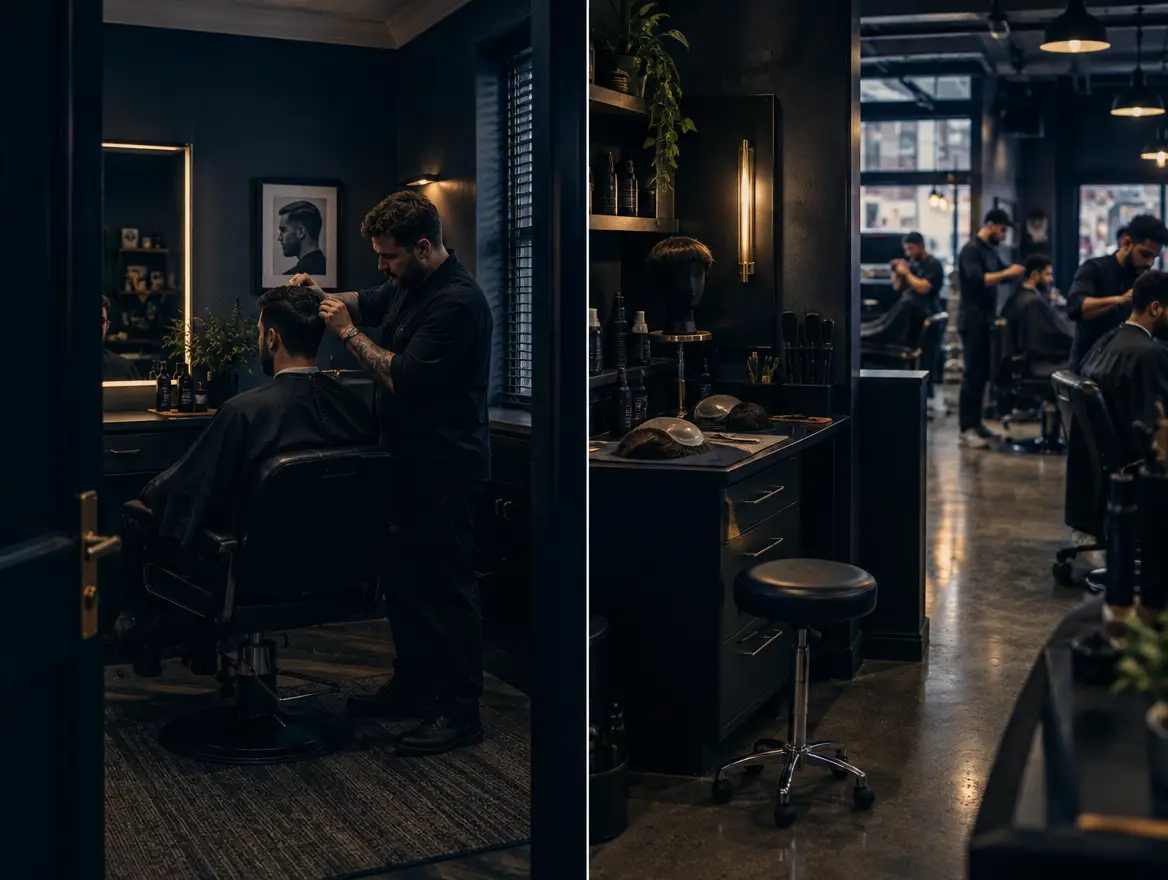
BarberRise supports five placement types: full-time, trial-to-permanent, rostered, short cover and rent-a-chair. Not all suit hair systems equally.
| Chair type | Best suited to | Main consideration |
|---|---|---|
| Full-time | Barbers ready to commit to a specialty | Needs steady client flow to justify |
| Trial-to-permanent | Both sides testing the fit | Agree what the trial covers and how it is paid |
| Rostered / part-time | Barbers building a book alongside other work | Specialty clients need predictable availability |
| Short cover | Studios covering leave or a gap | Handover of client notes is critical |
| Rent-a-chair | Experienced barbers with their own clientele | Contractor obligations and insurance apply |
Dedicated studios versus barbershops adding the service
A dedicated studio is built around the service. Private rooms, consultation space and a steady flow of maintenance clients are standard. The pace is slower and more consultative than a fade-heavy shop floor. If you want to master the specialty, this is where you learn fastest.
A barbershop adding hair systems is a different proposition. You may be the first or only specialist, which gives you leverage in shaping the service, but it also means you may need to build demand, set up a private area and educate the rest of the team. Ask where the clients are coming from before you accept.
Trial-to-permanent suits this specialty
Because the skill is partly invisible until someone watches you work, trial-to-permanent is a sensible route for both sides. The shop sees how you blend, consult and handle product. You see how the shop treats privacy, how it books maintenance and whether the clientele is real. Agree the trial's scope and pay in writing before day one.
A note on rent-a-chair
Renting a chair gives you independence and risk. You are typically a contractor, not an employee, which changes tax, insurance and entitlements. The Fair Work Ombudsman publishes guidance on the difference between employees and independent contractors, and it is worth reading before you sign anything.
How Does a Specialty Affect Pay?
A hair system specialty strengthens your negotiating position because few barbers can do the work well and the clients rebook. Pay still varies by shop, chair type and city, so look for roles that show pay up front and compare them against local benchmarks rather than guesses.
I am not going to quote a salary figure here. Pay depends on whether the role is employed or contracted, on hours, on how the shop handles commission or service fees, and on what city you are in. Anyone giving you a single national number for this specialty is guessing.
Why pay shown up front matters
A listing with no pay forces you to apply, interview and wait before you learn if it is viable. That is how specialists burn time. A listing that shows pay tells you the shop is serious and has thought through the role. It also lets you compare roles fairly. BarberRise is built around pay shown up front for exactly this reason.
How the specialty strengthens your position
You are not negotiating as a generalist. You are offering a service that brings its own recurring client base, needs real skill and carries trust. In a negotiation, point to three things:
- Your portfolio of blended units and clean fades.
- Your approach to consultation, aftercare and rebooking.
- Your handling of adhesives and confidentiality.
If the role is employed, check the terms against the relevant award. Many barbering roles fall under the Hairdressing and Beauty Services Award, but coverage depends on the role and the employer, so confirm with the Fair Work Ombudsman rather than assuming. Fades to Fair Work is not a slogan to me. Knowing your entitlements is part of the craft.
For local context, the Local Salary Benchmarks for Barbers article on BarberRise is the place to start, and it is worth reading alongside any listing.
How Should Shop Owners Write a Hair System Listing?
A good hair system listing names the service, shows the pay, describes the chair type, lists the skills you will test and explains how clients are found. It attracts the right barber because it is specific. Vague listings attract the wrong people and waste your time.
If you run a shop, here is what I would put in the listing.
Be specific about the work
Say "men's hair system barber", not "hairdresser" or "sales". Describe the actual service mix: consultations, fitting, bonding, cutting in and maintenance. Say whether the barber will work in a private room.
Show the pay and the chair type
State pay clearly. State whether the role is full-time, trial-to-permanent, rostered, short cover or rent-a-chair. Barbers filter on these. If you hide them, the best candidates scroll past.
State what you will test
Tell candidates you will run a working trial that assesses blending, scissor work, adhesive handling and consultation. It filters out the wrong people before they apply and reassures the right ones.
Explain where the clients come from
A specialist wants to know if the chair is full. Be honest. If you are launching the service, say so and explain how you plan to build it.
Why verified credentials matter
In a specialty where trust and privacy are the product, a screened candidate saves you real risk. On BarberRise, credentials are checked before a profile shows as verified, and applications arrive with portfolio and experience attached. You are not trawling a pile of unscreened CVs.
I learned the cost of weak hiring first-hand. I ran an academy inside my Canadian shops and trained barbers from scratch. Those staff were poached within months. That economics lesson shaped how I think about recruitment: you cannot afford to train people into a specialty and lose them, so you need to find barbers who already have the skill and want the chair.
What it costs
Posting a role on BarberRise is free. Agency commission is 0%, and it is never a percentage of wages. The first placement is free for founding shops. A full shop runs itself. An empty chair runs you.
How Do Barbers Find a Hair System Role?
Search the city hub for your location, filter by the specialty skill, and set job alerts so new roles reach you first. Then create a verified profile with portfolio attached. On a board built only for the trade, hair system chairs are visible rather than buried.
The process is simple. BarberRise runs on three steps, for both sides: create your profile, post or browse, connect and work.
Step 1: Create your profile
Build a verified profile with your portfolio, experience and credentials. For a specialty role, include before and after images of blended work, where you have permission, and a short note on how you handle consultations.
Step 2: Browse by city and skill
Use the city hubs, such as Sydney and Melbourne, to see roles near you. Then filter by specialty skill. If you are relocating, the role-type hubs help you see which chair types are available. Barbers coming from the UK, Canada or New Zealand can tell shops where they are heading and when, months before landing, and the Australia Ready pass helps them get ready to cut here. Visa questions always go to a registered migration agent. BarberRise never gives visa advice.
Step 3: Set alerts and connect
Set job alerts for hair system roles in your city so you do not have to keep checking. When a role appears, you apply with your portfolio already attached, and the shop sees a screened barber rather than a stranger.
Why a trade-only board changes the search
We're not Seek. We're not Indeed. We're only for barbers and barbershops. That is not a slogan against other boards. It is a design choice. A general board has to serve every trade, so it cannot understand a chair-based role, it cannot screen against a specialty and it cannot show a shop which barbers are heading to its city. A board built for one trade can. Only barbers, only barbershops.
What I Have Seen From Both Sides of the Chair
Here is my honest view: the biggest barrier to hair system roles is not skill. It is visibility. The barbers who could do the work cannot find the roles, and the shops that need them cannot find the barbers.
I built BarberRise inside my own shop, Black Sheep Barbershop on the Gold Coast. I know the 6am opens, the no-shows, the staff hunts and the difficulty of stepping away from the chair while keeping every chair filled. When a specialty service came up, the pattern was the same each time. A shop would post on a generic board, get a stack of unscreened applications, and spend hours sifting. Meanwhile a barber with the exact skill was scrolling past because the listing said "hairdresser".
That is the contrarian part of my position. Most people say a large generic board is adequate for recruiting. For a specialty like hair systems, I think it is the wrong tool. The role needs a reader who understands chair-based work, a screen that tests for the specific skill, and a listing that shows pay. A general board does none of that by design.
There is a second point that matters for the barber considering this specialty. A hair system career can be gentler on the body than a high-volume fade chair, because the pace is slower and appointments are longer. Education should support a career behind the chair, not just a grind. Ergonomics, clientele building and business skills matter in year fifteen, not just year one. A specialty with recurring clients is one of the more sustainable routes I know of, provided you pick a shop that treats it seriously.
Skills get you started. A community gets you further. If you are weighing this up, talk to barbers already doing it before you commit.
Find Your Chair: What to Do Next
If you are a barber, create a verified profile and set alerts for hair system roles in your city. If you are a shop, post your hair system role free, with pay shown up front and no commission. Find your chair. Rise together.
References
- Fair Work Ombudsman, Hairdressing and Beauty Services Award [MA000005] summary
- Safe Work Australia, Hazardous chemicals
- Office of the Australian Information Commissioner, Privacy
Frequently asked questions
What is a men's hair system?
A men's hair system is a non-surgical hair replacement unit, built on a base such as lace or thin skin and attached with tape or bonding adhesive. A barber fits it, cuts it into the client's own hair and maintains it over time.
Do I need special qualifications for hair system barber jobs?
Requirements vary by employer. Shops mostly look for demonstrated skill in fading, blending and scissor work, safe adhesive handling and confidentiality, usually proven through a portfolio and a working trial. Check any formal requirements with the employer, your state regulator and your insurer.
How much do hair system barbers earn in Australia?
It depends on the shop, the chair type, hours and city, so there is no single reliable figure. Look for roles that show pay up front, compare them to local benchmarks, and confirm award coverage with the Fair Work Ombudsman if the role is employed.
Are hair system roles full-time or part-time?
Both exist. Some are full-time or trial-to-permanent chairs in dedicated studios. Others are part-time, rostered or rent-a-chair arrangements inside barbershops that have added the service. Pick based on client volume and how much you want to commit.
How much does it cost a shop to post a hair system role on BarberRise?
Posting a role is free. Agency commission is 0% and is never a percentage of wages. The first placement is free for founding shops.
Find a chair near you
Every city, by state: barber jobs in Australia and hairdressing jobs in Australia. Pay floors and how each pay structure works: what barbers get paid.

BarberRise
The team building Australia's job platform for barbers and barbershops.
Keep reading
barber jobs Australia
Barber Jobs in Australia: Your Hub for Finding the Right Chair in Every City and Region
15 min read

visa sponsorship barber jobs by city
Visa Sponsorship Barber Jobs by City: How to Find Sponsoring Barbershops in Australia
18 min read
local salary benchmarks
Local Salary Benchmarks for Barbers: How to Compare Pay Across Australian Cities and Regions
16 min read