
Direct answer: Barber and hairdressing jobs in Australia exist in every capital city and plenty of regional towns, but the best chairs rarely make it onto generic job boards. BarberRise lists roles exclusively for barbers and barbershops, shows pay upfront, verifies credentials before a profile goes live, and covers chair types from full-time to rent-a-chair so both sides find the right fit fast.
I've spent ten years in the trade and managed three shops, and I can tell you the hardest part of this job was never the fade. It was filling the chair next to me with someone good, fast, and fair. Most barbers looking for work and most owners looking for staff are stuck using tools built for every trade at once: forklift drivers, baristas, and barbers all lumped into the same feed, with pay hidden and no way to check who is actually qualified.
This guide covers where barber and hairdressing jobs in Australia actually sit right now, why the big job boards let this trade down, the different types of chairs on offer, and how both barbers and shop owners can stop wasting time on the wrong matches.
Key Takeaways
- Good chairs in Australia often move through word of mouth and industry networks before they ever reach a public job board.
- Generic job boards bury barbering roles among unrelated trades and rarely disclose pay.
- Chair type (full-time, rostered, trial-to-permanent, short cover, or rent-a-chair) changes your pay structure, tools, client ownership and tax treatment.
- Barbers can be matched against pre-screened roles instead of applying blind to vague ads.
- Posting a role on BarberRise is free, BarberRise never takes a percentage of a barber's wages, and founding shops get their first placement free.
- A written agreement and a trial period protect both sides of the chair, no matter which chair type is on offer.
Built only for barbers and barbershops
Barbers: tell us where you want to cut and when, and shops see you first. Shops: post a role free, and your first placement is free as a founding shop.
Get startedSummary Table: Chair Types Compared
| Chair type | Pay structure | Tools & product | Client base | Tax treatment |
|---|---|---|---|---|
| Full-time employment | Fixed wage or salary, award-based | Usually supplied by shop | Shop-built, shared roster | PAYG employee |
| Part-time employment | Pro-rata wage for set hours | Usually supplied by shop | Shop-built | PAYG employee |
| Trial-to-permanent | Trial rate, then employment terms | Usually supplied by shop | Shop-built once permanent | PAYG employee once converted |
| Rostered casual | Hourly rate plus loading | Usually supplied by shop | Shop-built, variable shifts | PAYG employee |
| Short cover | Day rate or hourly | Usually supplied by shop | Existing bookings only | Usually PAYG for the shift |
| Rent-a-chair | Barber sets own pricing, pays chair fee | Barber usually supplies own | Barber builds and owns clientele | Typically self-employed, GST may apply |
The State of Barber and Hairdressing Jobs in Australia Right Now
Demand for skilled barbers and hairdressers sits ahead of supply in most Australian cities, and it is tighter again in regional centres where fewer trained barbers choose to relocate. Jobs and Skills Australia has flagged hairdressing occupations on its recruitment difficulty analysis in multiple states in recent years, which matches what I see from inside a shop.
The gap is not evenly spread. Capital city suburbs with strong foot traffic can attract applicants reasonably quickly, even if the quality is patchy. Regional towns often go months without a qualified applicant, because barbers weighing a move need to know about pay, hours and the shop culture before they will uproot. That information almost never appears in a standard listing.
Here is the part most owners underestimate: your best chairs are rarely advertised at all. A barber who is good, reliable, and easy to work with gets poached through word of mouth long before a public ad goes up. By the time a role reaches Seek or a Facebook group, it is often the seat nobody wanted to fill quietly. That dynamic pushes weaker applicants toward public boards and pushes strong barbers toward networks, referrals, and platforms built specifically for the trade.
Overseas-trained barbers add another layer. Barbers coming from the UK, Canada and New Zealand can tell a shop where they are heading and when, sometimes months before they land. That lead time is valuable to a shop trying to plan a roster, but only if the shop has a way to see it. Generic boards have no mechanism for this at all.
Why Generic Job Boards Fail This Trade
Generic job boards fail barbers and barbershops because they were built for every industry at once, not one trade. Pay is routinely hidden, credentials are never checked, and a barbering role sits buried between forklift operators and baristas in the same feed, wasting time on both sides of the chair.
Think about what a barber actually needs to judge a role: pay range, chair type, tools supplied or not, trial length, and whether the shop culture suits them. A standard job ad answers almost none of that. "Competitive salary" tells a barber nothing. "Great team environment" tells them nothing either. So barbers apply blind, interview blind, and often walk into a chair that does not match what they were promised.
Owners have the mirror problem. Post an ad on a generic board and you get a flood of applicants with no barbering background at all, because the algorithm matches on keywords, not trade knowledge. Sifting through that pile costs hours you do not have when you are also cutting hair, running the till, and covering a no-show.
This is the whole reason I built something different. We're not Seek. We're not Indeed. We're only for barbers and barbershops. A board built for one trade beats a general board to trawl, because roles go straight to barbers already screened for that specific chair, and applications arrive with a portfolio and experience attached, not a generic CV template.
The Kinds of Chair on Offer
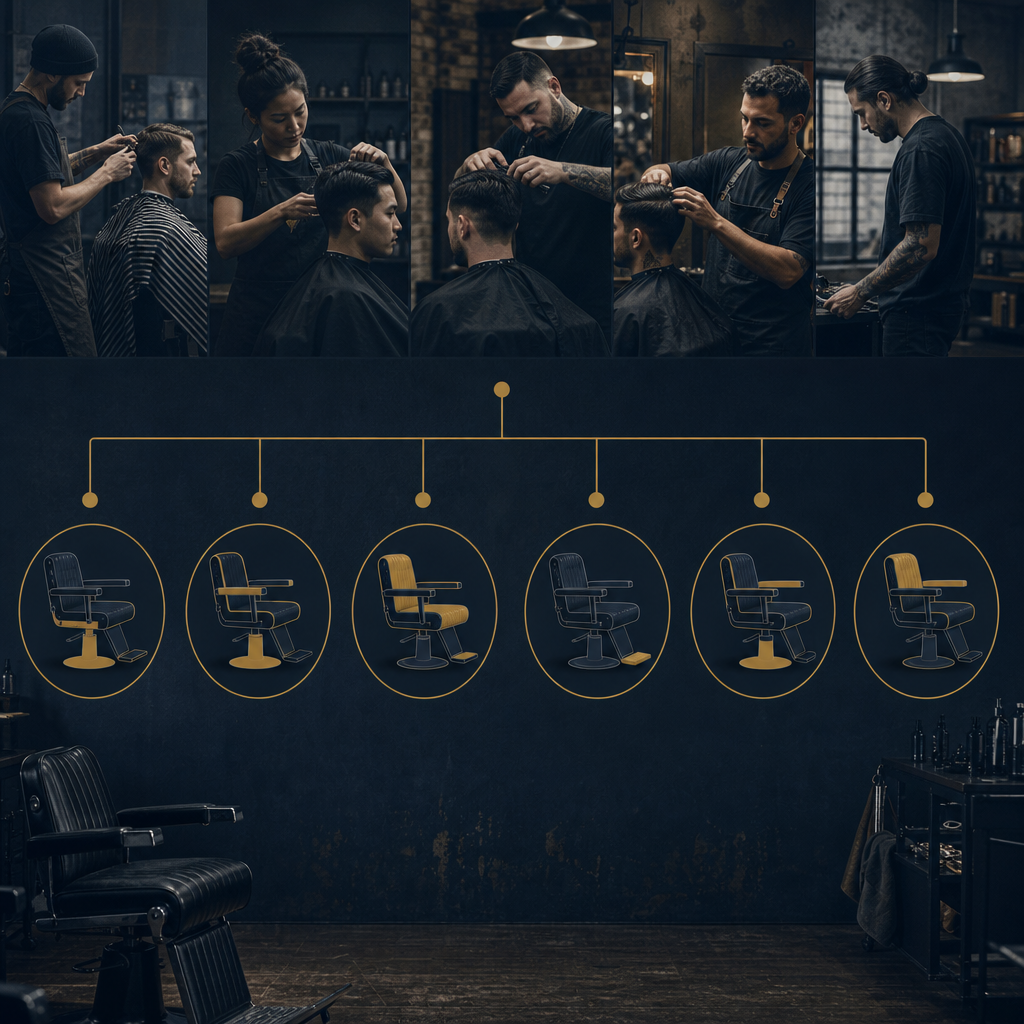
Australian barbershops fill chairs in five main ways: full-time or part-time employment, trial-to-permanent roles, rostered shifts, short cover, and rent-a-chair arrangements. Each changes who owns the client relationship, who supplies tools, how pay is structured, and what tax obligations apply, so it pays to know exactly which one you are being offered.
Full-time and part-time employment are the most straightforward. The shop supplies tools and product, builds the client base, sets the roster, and pays wages under the relevant award, most commonly the Hair and Beauty Industry Award. This suits barbers who want consistency and are happy to build a career inside someone else's shop.
Trial-to-permanent roles start as a short paid trial, usually a few shifts, before converting to an ongoing position. This protects both sides: the barber sees the real shop culture before committing, and the owner sees real cutting under pressure, not just a folio of photos. I have never regretted running a trial. I have regretted skipping one.
Rostered shifts and short cover suit barbers who want flexibility or shops that need to plug a gap fast, whether that is parental leave, injury, or a sudden resignation. Pay is usually hourly or a day rate, and tools stay with the shop.
Rent-a-chair is different again. The barber pays a chair fee, sets their own pricing, brings or builds their own client base, and typically operates as self-employed, which brings GST and business registration into play depending on turnover. This suits an established barber who wants to run their own book without the overheads of a full lease. It does not suit someone still building a client base, because there is no safety net if the chair sits empty.
Knowing which of these five you are negotiating changes everything from your take-home pay to how you lodge your tax return, so get it in writing before you start.
For Barbers: How to Get Matched Instead of Applying Blind
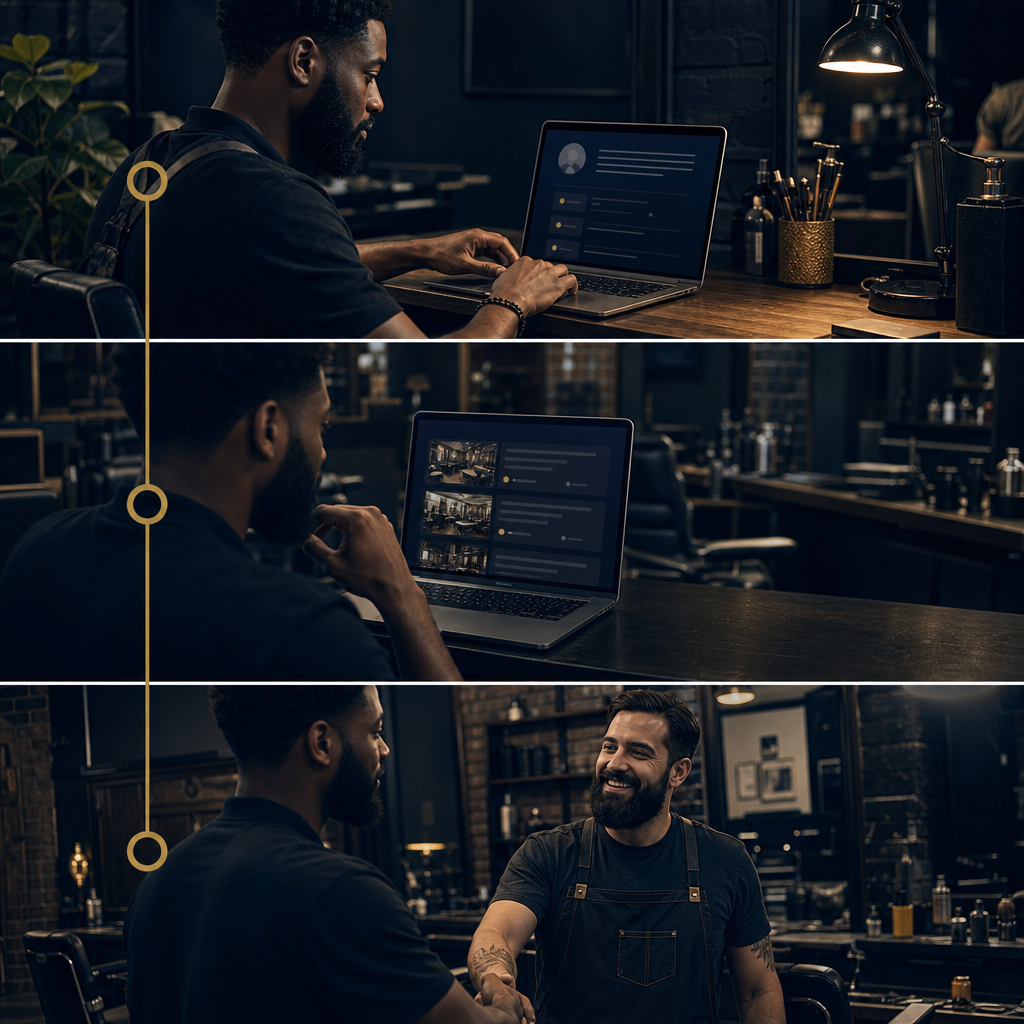
Barbers get matched to relevant roles by building a verified profile that shows real skills, availability, and location, instead of applying to vague ads and hoping. A verified profile means credentials are checked before it goes live, so shops know exactly who they are talking to before the first message.
My own framework for this is simple: three steps, both sides. Create your profile, post or browse, then connect and work. For a barber, that means listing your qualifications, your speciality (fades, straight razor, colour, whatever you are strongest at), your availability, and the area or areas you are willing to work. Overseas-trained barbers can also flag their expected arrival date, so shops planning a roster months out can see them coming.
One thing BarberRise will never do is give visa advice. If you have questions about your visa status or work rights, that conversation belongs with a registered migration agent, not a job board. What we can do is help you get Australia Ready through the platform's education tier, so your technique and paperwork line up with local expectations before you set foot in a shop.
A verified profile also means you are not competing with a hundred applicants who have never touched a straight razor. Roles come to you already filtered for your skill set, your availability, and your patch, whether that is inner-city Melbourne or a regional Queensland high street.
For Shop Owners: How to Post a Role and Reach Screened Barbers Only
Shop owners fill chairs faster by posting to a barber-only platform where every applicant is already screened for credentials and experience, instead of sifting through unrelated trades. Posting a role is free, BarberRise never takes a percentage of a barber's wages, and founding shops get their first placement free.
A full shop runs itself. An empty chair runs you. I have opened at 6am more times than I can count because a chair sat empty and someone had to hold the roster together. The fix is not more advertising, it is better targeting. When a role only reaches barbers who already meet the credential bar, you are not wading through a hundred applications to find three worth a callback.
The same three-steps framework applies from the owner's side: create your shop profile, post the role with pay and chair type stated upfront, then connect with barbers who match. Because roles reach barbers already moving from the UK, Canada and New Zealand before they hit the open market, you can plan a start date around someone who has not even landed yet.
Hire your way, whether that is a rostered part-timer, a trial-to-permanent junior, or a chair renter who brings their own book. State the pay range and chair type in the ad. Ambiguity here is the single biggest reason good barbers scroll past a listing.
Red Flags on Both Sides
The clearest red flags in barber and hairdressing hiring are undisclosed pay, no trial period, and no written agreement, and they cut both ways between barbers and shop owners. Any of these should slow you down before you commit to a chair.
For barbers, walk carefully around a shop that will not state pay, chair type, or hours before an interview, or one that pushes straight to a permanent start with no trial at all. A trial protects you as much as the owner. It is your chance to see the real roster, the real client flow, and the real culture before you commit.
For owners, be wary of an applicant who will not confirm qualifications, who has no verifiable references, or who wants cash-in-hand with no paperwork. That path leads to Fades to Fair Work faster than anyone wants, whether that is an underpayment claim, a disputed roster, or a dispute over who owns a client list built on a rent-a-chair arrangement.
A written agreement, even a simple one, should cover pay rate, chair type, trial length, tools and product responsibility, and notice periods. It takes twenty minutes to draft and saves both sides weeks of dispute later.
What Ten Years and Three Shops Taught Me About Hiring Barbers
I built BarberRise because generic hiring tools kept failing both sides of the chair, and I had lived it from both ends. Running an in-house academy taught me that training people is not the same as keeping them, and owning a shop on the Gold Coast taught me that an empty chair is the single biggest drain on a barbershop owner's time and sanity.
Early in my career I ran an academy inside my own shops, training barbers from scratch because the local talent pool was too thin. I invested real hours and real money into developing new staff. Most of them were poached within months, often by shops that had spent nothing on their training. That experience shaped how I think about recruitment and retention: training alone does not build loyalty, and a platform that only helps you find people is only solving half the problem.
Later, as owner of Black Sheep Barbershop on the Gold Coast, I lived the 6am opens, the no-shows, the endless staff hunts through Facebook groups and DMs, and the near impossibility of stepping away from my own chair while keeping every other chair filled. That is what pushed me to build BarberRise inside my own shop first, before I ever thought about other owners using it. I wanted specialised job placement, practical education, and an industry community in one place, not three separate headaches.
That experience is why BarberRise runs on three tiers, not one. Community, education, and job placement work together, because a career behind the chair, not just a grind, needs more than a filled roster. Skills get you started. A community gets you further. Education that outlasts hustle culture, covering health, ergonomics, client building and business basics, is what keeps a barber in the trade past year five, not just year one.
My contrarian view, if you want to call it that, is this: most people treat recruitment as a transaction, a form filled in and a wage negotiated. I think that is why so much hiring in this trade fails. Rise together applies to owners and barbers equally. A shop that only ever thinks about filling a chair will keep losing good barbers to shops that think about growing one.
References
- Fair Work Ombudsman, Hair and Beauty Industry Award (fairwork.gov.au)
- Australian Taxation Office, Employee or contractor guidance (ato.gov.au)
- Jobs and Skills Australia, Skills Priority List (jobsandskills.gov.au)
- Australian Bureau of Statistics, Labour Force, Australia (abs.gov.au)
Ready to find your chair or fill one? Barbers, create a verified profile and get matched to roles built for your skills. Shop owners, post a role free and claim your founding-shop first placement free. Only barbers, only barbershops. Rise together.
Frequently asked questions
How do I find barber and hairdressing jobs in Australia?
Start with a barber-only platform where roles are matched to your skills and location, rather than trawling generic job boards. A verified profile on BarberRise puts your qualifications, speciality and availability in front of shops already screened to want that skill set, instead of you applying blind to vague listings.
What's the difference between chair rental and employment for barbers?
Employment means the shop supplies tools, builds the client base, and pays a wage under an award such as the Hair and Beauty Industry Award. Rent-a-chair means you pay a fee, set your own pricing, and build your own client base, typically as a self-employed operator with your own tax and GST obligations.
Do overseas-trained barbers need anything special to work in Australia?
Qualifications and licensing requirements vary, and any question about visa status or work rights should go to a registered migration agent, not a job board. BarberRise's Australia Ready pass helps overseas-trained barbers align their technique and paperwork with local expectations, but it is not migration advice.
How much does it cost to post a barber job in Australia on BarberRise?
Posting a role is free, and BarberRise never takes a percentage of a barber's wages. Founding shops also get their first placement free, so there is no cost barrier to trying a trade-specific platform instead of a generic board.
What is a trial-to-permanent barbering role?
It is a short paid trial, often a few shifts, that lets both the barber and the shop assess fit before converting to an ongoing position. It protects the barber from an unclear culture and protects the owner from hiring on portfolio photos alone.
Is barbering a good career in Australia right now?
Demand for skilled barbers remains strong across most Australian cities and many regional centres, based on recruitment difficulty patterns tracked by Jobs and Skills Australia. Long-term success in the trade depends on more than technique though: health, ergonomics, business skills and community all factor into whether a career behind the chair lasts.

BarberRise
The team building Australia's job platform for barbers and barbershops.
Keep reading
benefits for job seekers
What Barbers Get From BarberRise: Free Profiles, Upfront Pay and Chairs That Actually Suit You
11 min read
barber hiring platform australia
How BarberRise works for barbers and barbershops in Australia
13 min read
benefits for barbershops and salons
Benefits for Barbershops and Salons: How BarberRise Helps You Hire Without Agency Fees
18 min read