
The barber employment outlook in Australia favours skilled, verified barbers and is tight for shops trying to hire them. In our experience, demand for fades, beard work and textured hair runs ahead of experienced supply. Barbers can be choosier on pay and chair type, and shops need to show pay up front.
I have spent ten years in the trade and managed three shops. I now run Black Sheep Barbershop on the Gold Coast, and I built BarberRise inside it. This piece is a trade-insider read of where barber jobs are heading in 2026, written for both sides of the chair.
You will not find invented vacancy numbers or growth percentages here. Where national data exists, I point you to the source. Where it does not, I tell you what I see on the floor and why it matters for your next move or your next hire.
Key Takeaways
- Skilled, verified barbers have more options than at any point in my ten years in the trade, especially those with fade, beard and textured hair skills.
- Shops are not short of applicants. They are short of applicants who are screened, credentialed and right for the chair.
- Chair type (full-time, trial-to-permanent, rostered, short cover or rent-a-chair) now decides whether a placement lasts.
- Generic job boards hide pay, bury good candidates and add agency commissions. A trade-only board fixes those problems at the source.
- The barbers still thriving in year fifteen are the ones who built health, business skills and community alongside technique.
Built only for barbers and barbershops
Barbers: tell us where you want to cut and when, and shops see you first. Shops: post a role free, and your first placement is free as a founding shop.
Get startedSummary Table
| Factor | What it means for barbers | What it means for shops |
|---|---|---|
| Demand for specialist skills | Fades, beard work and textured hair give you pricing and choice | Generalists are easier to find, specialists are not |
| Pay transparency | You can screen out roles that hide pay | Showing pay up front attracts better applicants |
| Chair type | You can pick the structure that suits your life | Offering several chair types widens your pool |
| Credentials | Verified profiles stand out | Checked credentials cut risk and sifting time |
| Hiring channel | A trade-only board shows relevant roles | A trade-only board shows relevant barbers |
| Retention | Education and community keep you in the trade | Development without retention planning gets poached |
The Barber Employment Outlook at a Glance
Barbering in Australia is a trade with steady demand and a persistent shortage of experienced, verified barbers. I cannot give you a national vacancy count that I cannot source. What I can stand behind is this: official data sits with Jobs and Skills Australia, and the ground-level picture is a tight market.
Start with the official sources. Jobs and Skills Australia runs Labour Market Insights and the Occupation Shortage List. Barbers are grouped with hairdressers in the national occupation classification, so check how hairdressers are currently rated rather than relying on anyone's headline, including mine. Ratings change from release to release.
Now the ground-level picture. Across three shops, the same pattern repeated. A chair sat empty not because nobody applied, but because nobody suitable did. Applicants had no portfolio, unclear experience or the wrong expectations about the chair. A full shop runs itself. An empty chair runs you.
That gap between "people who applied" and "people who fit" is the real outlook. Demand for barbers is not the problem. Matching is.
What the outlook does not tell you
National occupation data is useful for direction, but it blurs the detail that matters in a shop. It does not separate a barber who can run a skin fade and a beard line from one who has only ever done scissor-over-comb on straight hair. It does not tell you who wants a rented chair and who needs a rostered wage.
Treat the national data as the weather forecast. Your suburb, your skills and your chair type are the climate you actually work in.
What Is Driving Demand for Barbers
Three things drive barber demand: regular grooming habits, specialist skills that are hard to find, and a shortage of experienced barbers whose credentials a shop can trust. Clients book on a cycle, so a good barber builds a book that fills itself. That recurring demand is what makes the trade resilient.
Grooming habits that repeat
A haircut is not a one-off purchase. Fades grow out quickly, and clients who care about their look book the next appointment before they leave the chair. Beard maintenance adds a second reason to return. This rhythm is why a barber with a loyal clientele has income stability that many other trades lack.
I am describing a pattern I have seen behind the chair, not quoting a statistic. The mechanism is simple: repeat visits build a book, and a book builds a barber's bargaining position.
Specialist skills are the scarce part
Cutting hair is not scarce. Cutting a clean skin fade, shaping a beard and working confidently with textured hair is. Shops tell us the same thing again and again: they can find a barber, but they cannot find the barber with the exact skills their clientele asks for.
If you cut textured hair well, you are in a smaller pool than you think. If you do not yet, it is one of the most commercially useful skills you can add.
The verification gap
The third driver is trust. A shop owner who has been burned by a no-show or an overstated CV becomes cautious. They want proof of experience, a portfolio and checked credentials before a barber touches a client. When that proof is missing, the chair stays empty longer.
That is why "experienced and verified" is the shortage that matters most. Plenty of people can hold clippers. Far fewer arrive with evidence a shop can rely on.
How the Outlook Differs for Barbers and for Shops
The same market looks different from each side of the chair. Barbers gain bargaining power on pay, chair type and conditions. Shops compete harder for talent and carry more risk when a hire goes wrong. Understanding both views helps each side negotiate fairly and avoid wasted weeks.
For barbers: more choice, so use it
If you are skilled and verified, you can ask better questions. What is the pay? Is it an award-based wage or a commission split? Is the chair rented or rostered? What does a trial period look like? You should not need to chase answers to basics.
Employees in hair and beauty are covered by an industry award. The Fair Work Ombudsman publishes the Hair and Beauty Industry Award and its pay guides, so check the current minimums before you accept any offer. Knowing the floor lets you judge whether a role is generous or merely compliant. Fades to Fair Work: know your craft and know your rights.
For shops: the bar has been raised
Shop owners now compete on more than the chair. They compete on pay clarity, culture, flexibility and development. A barber with options will not wait three weeks for a reply or apply to a role with no pay shown.
I know this from the owner's side. Between 6am opens, no-shows and staff hunts, it is hard to step away from the chair while keeping every chair filled. A slow, messy hiring process is not just annoying. It costs real trading hours.
Barbers moving between countries
Barbers from the UK, Canada and New Zealand often plan a move to Australia months ahead. On a generic board, a shop never sees them coming. On a trade-only platform, shops can see barbers heading to their city before those barbers reach the open market, and the Australia Ready pass helps those barbers prepare to cut here.
One firm line: BarberRise never gives visa advice. Visa questions always go to a registered migration agent.
Chair Types Shaping the Market
Chair type is how a barber works and gets paid: full-time, trial-to-permanent, rostered, short cover or rent-a-chair. Matching the right chair to the right barber matters more than ever, because a mismatch on structure is the most common reason a placement ends early, even when the skills fit perfectly.

Full-time
Full-time suits barbers who want stability, a steady wage and a team around them. It also suits shops building a consistent roster and brand. The trade-off is commitment on both sides, so the fit needs to be right from the start.
Trial-to-permanent
Trial-to-permanent lowers risk for both parties. The shop sees the barber work with real clients. The barber sees the culture, the clientele and the pay in practice. Done well, it replaces a hopeful interview with evidence. Make the trial terms clear in writing, including pay during the trial.
Rostered and short cover
Rostered work suits barbers who want set shifts around study, family or a second venture. Short cover fills gaps from leave, illness or a busy season. Both help shops stay open without overloading the core team, and both give barbers flexibility without a long commitment.
Rent-a-chair
Rent-a-chair suits established barbers with their own book who want to run their own business inside someone else's shop. It gives independence, but also responsibility for tax, insurance and bookings. Both parties should understand how independent contractor arrangements work. Where a rented chair is really an employee in disguise, that is a legal problem. The Fair Work Ombudsman has guidance on the difference.
BarberRise supports five placement types: full-time, trial-to-permanent, rostered, short cover and rent-a-chair. Both sides choose the structure that suits them. We call it Hire your way.
Why Generic Job Boards Fail the Trade
Generic job boards fail barbering because they were not built for chair-based work. Pay is often hidden, applicants are unscreened, credentials go unchecked and agencies add commissions. The result is slow hiring for shops and noise for barbers. We are not Seek. We are not Indeed. Only barbers, only barbershops.
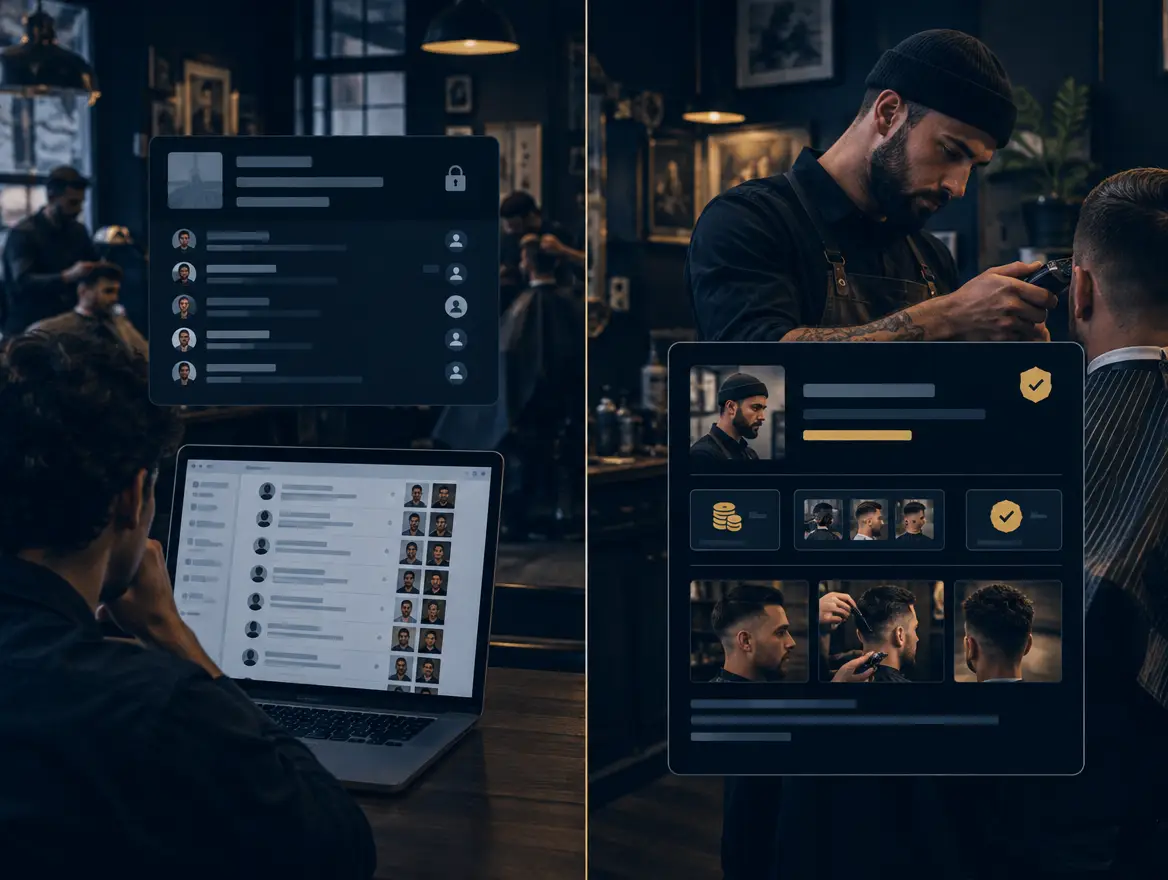
Hidden pay wastes everyone's time
A barber scrolling a general board sees "competitive salary" and moves on. Competitive against what? When pay is hidden, good barbers skip the ad and weaker-fit ones apply anyway. Showing pay up front is the single easiest change a shop can make to improve applicant quality.
Unscreened applicants mean hours of sifting
Post a barber role on a general board and you will often get applications from people with no relevant background. The shop owner then spends evenings sorting through CVs between clients. That is time taken from the chair, the floor and the family.
A board built for one trade works differently. The role goes straight to barbers already screened for it, and applications arrive with portfolio and experience attached.
Unchecked credentials carry risk
A generic board has no idea whether a barber's claimed qualification is real. On BarberRise, credentials are checked before a profile shows as verified. For a shop, that removes a layer of guesswork. For a barber, it turns your experience into something that gets noticed.
Agency commissions eat into wages
Many recruitment agencies charge a percentage of the placement. That cost lands on the shop and, indirectly, on pay. On BarberRise, posting a role is free and agency commission is 0%. It is never a percentage of wages. For founding shops, the first placement is free.
Facebook groups and DMs are not a system
Plenty of shops hire through Facebook groups and direct messages. I have done it. It works until it does not: no screening, no records, no structure, and the best candidates get lost in the scroll. That is a hunt, not a process.
How to Position Yourself Over the Next 12 Months
Position yourself by building evidence of your skills, choosing a chair type deliberately and making your pay expectations clear. Barbers should verify credentials and sharpen a specialty. Shops should show pay up front and post where barbers actually look. Both moves cut wasted time on both sides of the chair.
For barbers
- Get your credentials checked. Most shops expect a recognised qualification or proven experience. A verified profile shortens the path from application to trial.
- Build a portfolio. Clean photos of fades, beard work and textured hair cuts do more than a paragraph of description. Keep them current.
- Choose a specialty. Be known for something: skin fades, beard design, textured hair or classic scissor work. Specialists can name their price.
- Decide your chair type first. Know whether you want full-time stability, flexible rosters or the independence of a rented chair before you start applying.
- Look after your body. Back, shoulders, wrists and feet decide how long you last. Ergonomics is a career strategy, not an afterthought.
- Plan for year fifteen. Learn pricing, client retention and basic business skills now. This is education that outlasts hustle culture.
For shop owners
- Show pay up front. Barbers skip roles that hide it. Transparency filters in the right people.
- Offer more than one chair type. A trial-to-permanent or rostered option widens your pool without lowering your standards.
- Post to a trade-only board. Your role should reach barbers already screened for it, not a general crowd.
- Write a real role description. Say what the clientele looks like, what skills matter and what the shop culture is.
- Plan retention before you hire. A new starter needs a reason to stay beyond the first offer.
Three steps, both sides
The process is the same whether you are filling a chair or looking for one. Three steps. Both sides. Create your profile, post or browse, then connect and work. Barbers create a profile, get credentials verified and see roles with pay shown up front. Shop owners post a chair free with 0% commission, and founding shops get their first placement free.
Find your chair. Rise together.
The Hidden Cost Nobody Prices In: Training Barbers Who Then Leave
Most outlook pieces stop at supply and demand. The cost that rarely gets discussed is what shops lose after they hire and train. My view is that recruitment and retention are one problem, and a shop that treats them separately will keep paying twice.
Before BarberRise, I ran an academy inside my Canadian shops and trained barbers from scratch. I invested real time and money in developing new staff. Within months, those staff were poached. It was a painful lesson in economics: training someone who then leaves is a cost the shop carries alone.
That experience shaped how I think about the outlook. The shortage of experienced barbers is not only a pipeline problem. It is a retention problem. Shops that cannot keep trained staff are forced back into the hiring market again and again, which keeps the shortage alive.
Here is where I take a position that not everyone agrees with. Most people say barber education should be about technique and relentless hustle. I disagree. If the only message is "grind harder", you train people who burn out or leave for a better offer. Education should support a career behind the chair, not just a grind.
That is why BarberRise is built on three tiers: community, education and job placement. A placement alone fills a chair. Education builds skills and health. Community gives people a reason to stay in the trade. Skills get you started. A community gets you further.
For shops, the practical lesson is to hire people who want what you offer, be clear about progression and pay, and make the shop somewhere a good barber would choose to stay. For barbers, it is the reverse: pick a shop that invests in you, and invest in yourself.
Master your craft, grow your shop.
References
- Jobs and Skills Australia, Labour Market Insights
- Jobs and Skills Australia, Occupation Shortage List
- Fair Work Ombudsman, Hair and Beauty Industry Award (MA000005) summary
Frequently asked questions
Is barbering a good career in Australia?
Barbering can be a strong career for people who build real skills and a loyal clientele. Clients return on a regular cycle, and specialist skills give you choice on pay and chair type. Long-term success also depends on health, ergonomics and business knowledge, not only technique.
Is there demand for barbers in Australia?
In our experience, demand for skilled, verified barbers is strong and shops often struggle to fill chairs with the right people. For official data, check Jobs and Skills Australia's Labour Market Insights and Occupation Shortage List, where barbers are grouped with hairdressers.
What qualifications do I need to work as a barber in Australia?
Most shops expect a recognised barbering qualification or proven experience, plus a portfolio. Requirements vary between employers and states, so check with the shop and the relevant authority. On BarberRise, credentials are checked before a profile shows as verified.
What is the difference between a full-time role and rent-a-chair?
A full-time role is employment with set pay and conditions. Rent-a-chair means you run your own business inside a shop and pay for the space, taking responsibility for tax, insurance and bookings. Both can work well when the structure matches what the barber wants.
Can overseas barbers work in Australia?
Barbers from the UK, Canada and New Zealand do move to Australia, and shops can see them coming on BarberRise. BarberRise never gives visa advice. Any visa question should go to a registered migration agent.
Find a chair near you
Every city, by state: barber jobs in Australia and hairdressing jobs in Australia. Pay floors and how each pay structure works: what barbers get paid.

BarberRise
The team building Australia's job platform for barbers and barbershops.
Keep reading

Barber and hairdressing jobs in Australia
Barber and Hairdressing Jobs in Australia: Where to Find Them and How to Land the Right Chair
15 min read

required qualifications for barber jobs
Required Qualifications for Barber Jobs in Australia: What Shops Ask For and How to Prove It
14 min read

barber job market FAQs
Barber Job Market FAQs: Straight Answers About Finding or Filling a Chair in Your City
15 min read