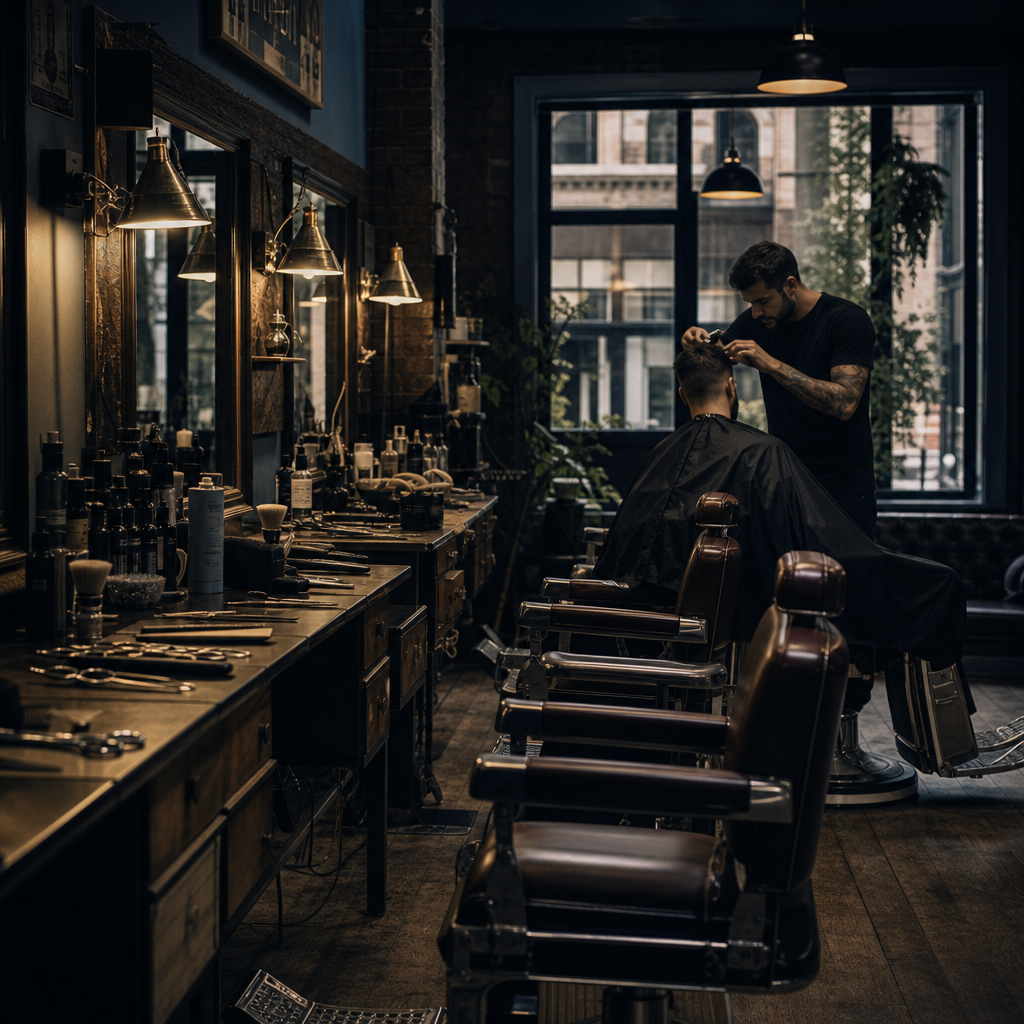
A strong barbershop employer profile shows barbers the real chair before they apply. It covers your shop story, specialisations, clientele, team, booking system and chair types, backed by honest, well-lit photos of your stations, tools, team and street front. Keep it current, keep it truthful, and state the pay.
Barbers do not pick a job the way an office worker does. They pick a room, a crew and a clientele they will stand beside for eight hours a day. A generic job board squeezes all of that into a text box, so the shops that look the same on paper lose good barbers to the ones that show up properly.
This guide is for Australian shop owners and managers, especially independents competing with bigger chains. You will see what to put in your profile, how to shoot photos that work, which mistakes cost you applicants, and how to pair the profile with a listing so the right barbers apply with confidence. Barbers reading this can use it as a checklist for what a good shop profile should tell them.
Key Takeaways
- Barbers judge the shop, the crew and the clientele before they weigh up pay, so your profile does the first round of selling.
- Cover the basics every time: shop story, specialisations, clientele, team size, booking system and the chair types you offer.
- Use real photos in natural light of your own stations, tools, team and street front. Stock images cost you trust.
- Outdated photos, vague descriptions and overselling lead to bad matches and early exits. Honesty gets you better applicants.
- Link the profile to the role, show pay up front and let verified credentials do the reassuring on both sides of the chair.
Built only for barbers and barbershops
Barbers: tell us where you want to cut and when, and shops see you first. Shops: post a role free, and your first placement is free as a founding shop.
Get startedSummary Table
| Profile element | What to show | Why barbers care |
|---|---|---|
| Shop story | Who you are, how the shop started, what you stand for | Tells them whether the culture fits before they visit |
| Services and specialisations | Fades, beard work, colour, classic cuts, kids, long hair | Shows whether the work suits their skills and their portfolio |
| Clientele | Regulars, walk-ins, age mix, suburb | Signals how quickly they can build a book |
| Team | Who works there, how they work together | Culture is the most common reason barbers leave |
| Booking system | Online bookings, walk-ins, or a mix | Affects income stability and daily rhythm |
| Chair types | Full-time, trial-to-permanent, rostered, short cover, rent-a-chair | Lets barbers pick the arrangement that suits their life |
| Workplace photos | Stations, tools, lighting, team at work, street front | Lets them picture themselves in the chair |
Why Barbers Check the Shop Before the Pay
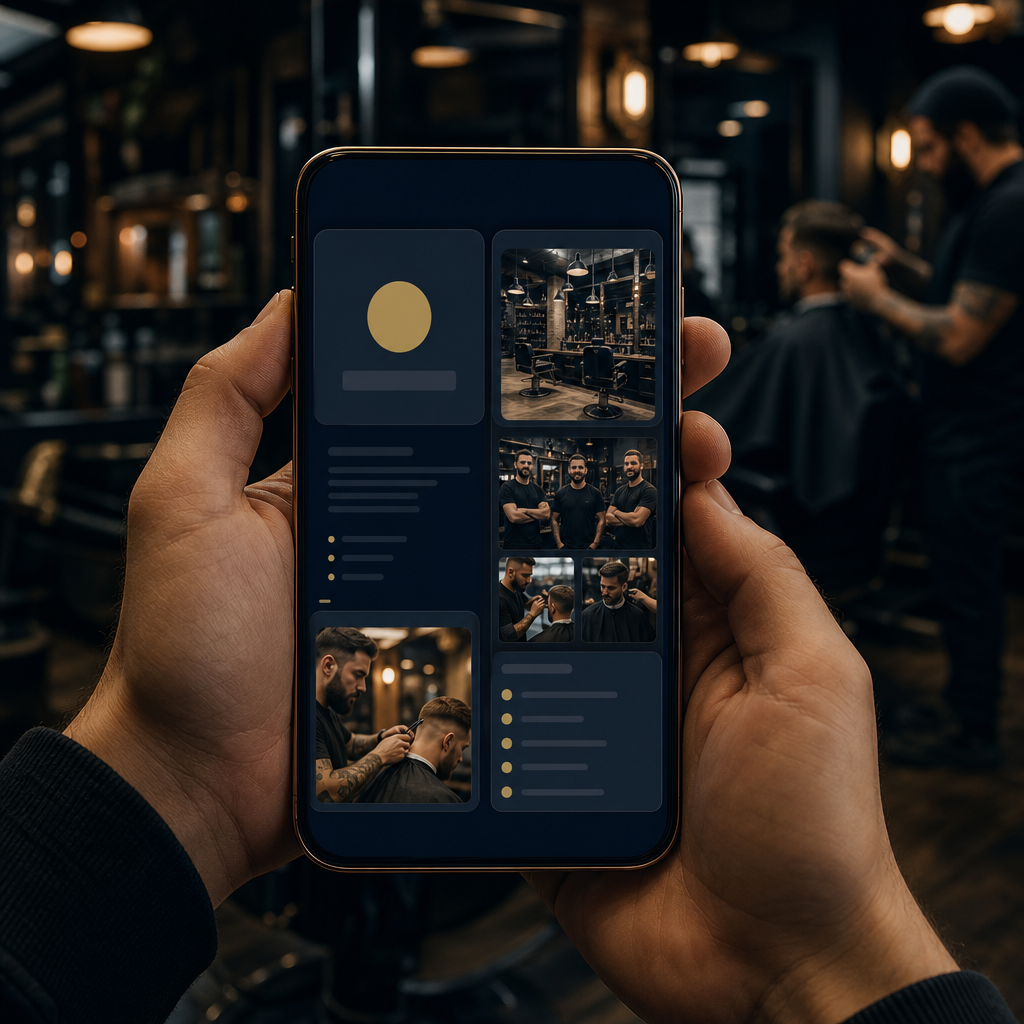
Barbers check the shop first because the chair is a daily environment, not just a pay rate. The clientele, the team and the culture decide whether a barber builds a loyal book or burns out. Pay still matters, but it only gets weighed once the shop passes the look-and-feel test.
Think about the questions running through a barber's head when they open a listing. What will I be cutting? Who will I be standing next to? Is the place clean and set up properly? Will I get support, or be left alone with a walk-in queue? None of those are answered by a job title and three lines about being a fast-paced, friendly team.
Generic boards were built for every job under the sun, so they treat a barber role like any other vacancy. That is why so many barbering listings read the same. We say it plainly at BarberRise: we're not Seek. We're not Indeed. It is only barbers, only barbershops, which means your profile can show what actually matters in this trade.
Consider a barber choosing between two roles. The weekly rate is similar and both shops are a short drive apart. One listing has a logo and a few lines of text. The other has bright photos of the stations, the team mid-cut, a note on skin fades and beard work, and a clear description of the booking system. The barber messages the second shop first, not because it pays more, but because they can already picture the first Monday. That is a hypothetical, but any owner who has watched applicants arrive will recognise it.
What to Put in Your Barbershop Employer Profile
A good employer profile answers the questions a barber would ask on a visit: what the shop is, what work comes through the door, who they would work with, how clients are booked and which chair arrangement is on offer. Cover those six things plainly and you will filter out poor matches before anyone applies.
Your shop story
Keep it short and real. When did you open, what kind of shop did you set out to build, and what do you want it to feel like to work there? Two or three honest paragraphs beat a polished mission statement. If you are a small independent, say so. Many barbers specifically want an owner-operated shop where the boss is on the floor.
Services and specialisations
List what you actually do most. Skin fades, tapers, beard sculpting, hot towel shaves, colour, classic scissor work, kids cuts. Be clear about what is core and what is occasional. A barber who loves precision fades should not discover on day one that the shop is mostly long-hair scissor work. Matching on specialisation is where good hires start.
Clientele and team
Describe who sits in your chairs. Regulars on a four-week cycle, tradies before work, uni students, corporate clients, families. Name the suburb and the feel of the street. Then describe the team: how many barbers, how long they have been there, and how you work together. Small details matter, such as whether the crew shares tips, runs product education or finishes the day together.
Booking system and how the day runs
Say whether you run online bookings, walk-ins or both, and which system you use. A barber chasing a steady book wants to know the day is structured. A barber who thrives on walk-ins wants to know that too. Mention opening hours, including the early opens and late closes, so nobody is surprised.
Chair types offered
Barbering is not one kind of job. BarberRise supports five placement types: full-time, trial-to-permanent, rostered, short cover and rent-a-chair. Say which you offer and what each means in your shop. If you offer rent-a-chair, be clear on the terms and make sure the arrangement genuinely suits an independent contractor. The Fair Work Ombudsman publishes guidance on the difference between employees and contractors, and the Hair and Beauty Industry Award sets out minimum conditions for employees. Check both before you write the listing.
This is the first of the Three steps. Both sides. Create your profile, post or browse, then connect and work. The profile comes first because everything after it depends on it.
Workplace Photos That Work
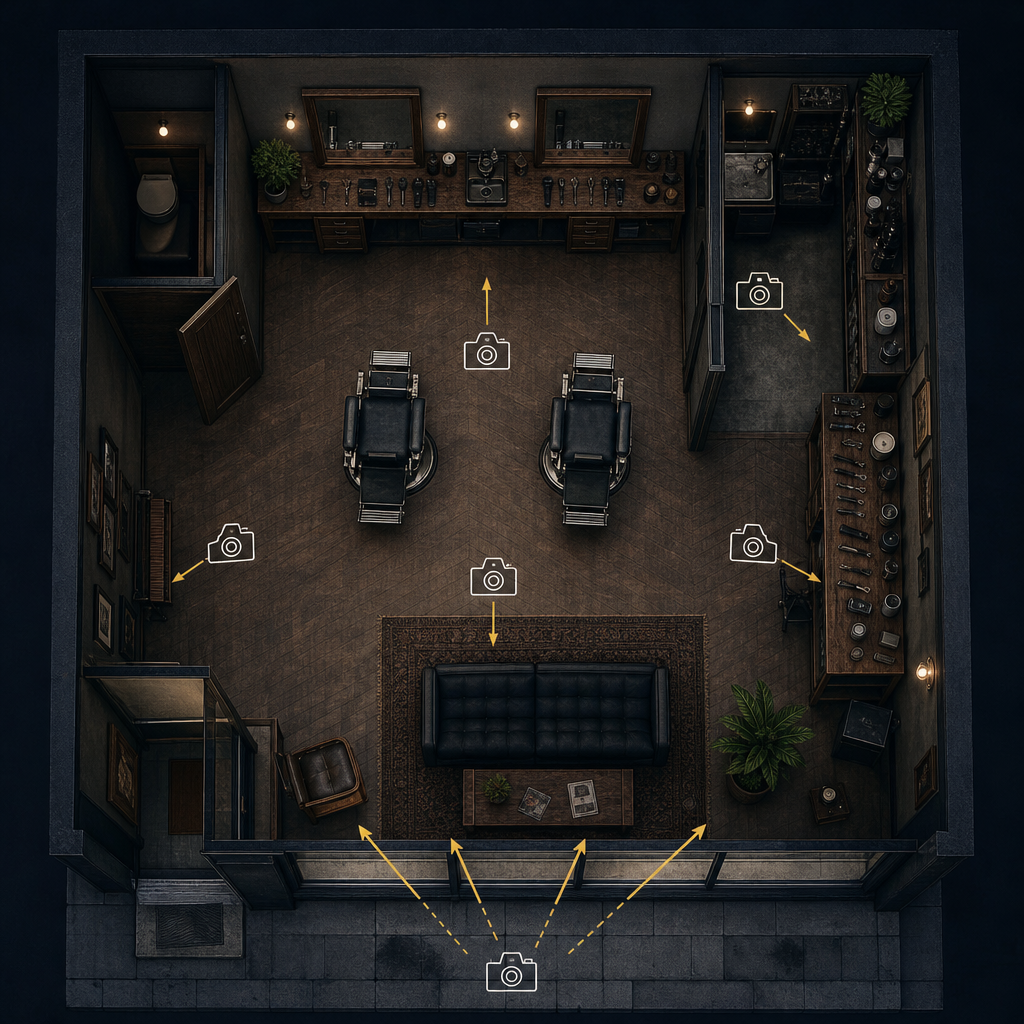
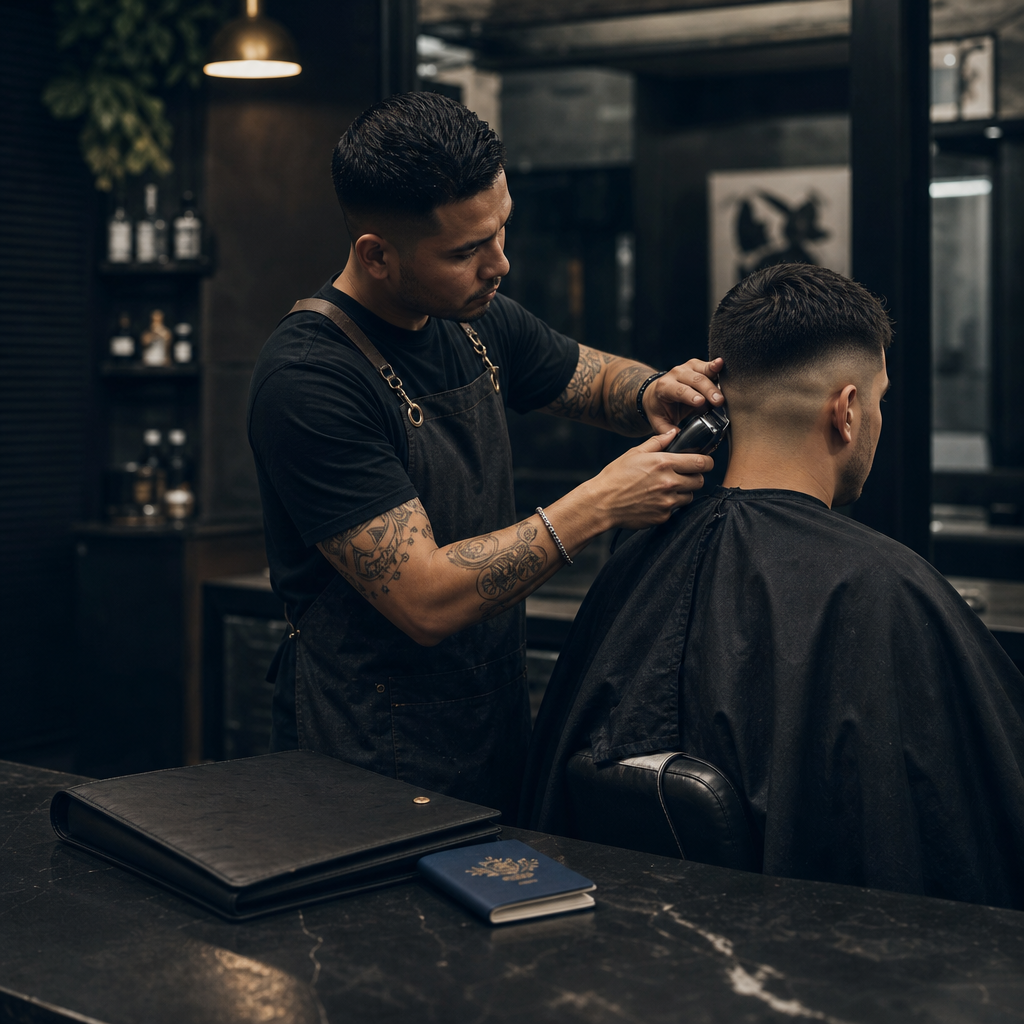
Photos that work show the real working environment: stations, tools, lighting, the team mid-cut and the street front. Shoot in natural light, clear the benches, use a clean phone lens and skip stock images. Barbers spot a stock photo instantly, and it tells them you have nothing real to show.
You do not need a photographer. You need an hour on a quiet morning and a willingness to show the shop as it really looks on a good day.
| Shot | What it should show | Common slip |
|---|---|---|
| Street front | The shopfront, signage and approach from the footpath | Shooting at night or with a car in the way |
| Stations | A full chair, mirror and bench, tidy | Clutter, loose cables, old product stock |
| Tools | Clippers, trimmers, razors and scissors laid out | Dirty blades or mismatched kit |
| Team at work | Barbers mid-cut with the client's consent | Posed group shots with no one working |
| Back bar and waiting area | Where clients wait and where product sits | Dark corners and storage mess |
| Lighting | Natural light across the floor | Harsh overheads and flash glare |
Use natural light
Shoot near the front windows in the morning or late afternoon. Turn off any flickering or mixed-colour fittings if you can. Hold the phone steady, wipe the lens and shoot landscape for the main images. Google's guidance for business profile photos broadly asks for the same: in focus, well lit and not heavily filtered. A barber scrolling on a phone makes a judgement in seconds.
Tidy, not staged
Clear the benches, wipe the mirrors and sweep the floor. Do not stage a spotless shop that no one has worked in. Barbers know what a busy Saturday looks like, and a little life in the frame makes the photo more credible, not less. A tidy bench says you respect your tools and your team.
Show people, with permission
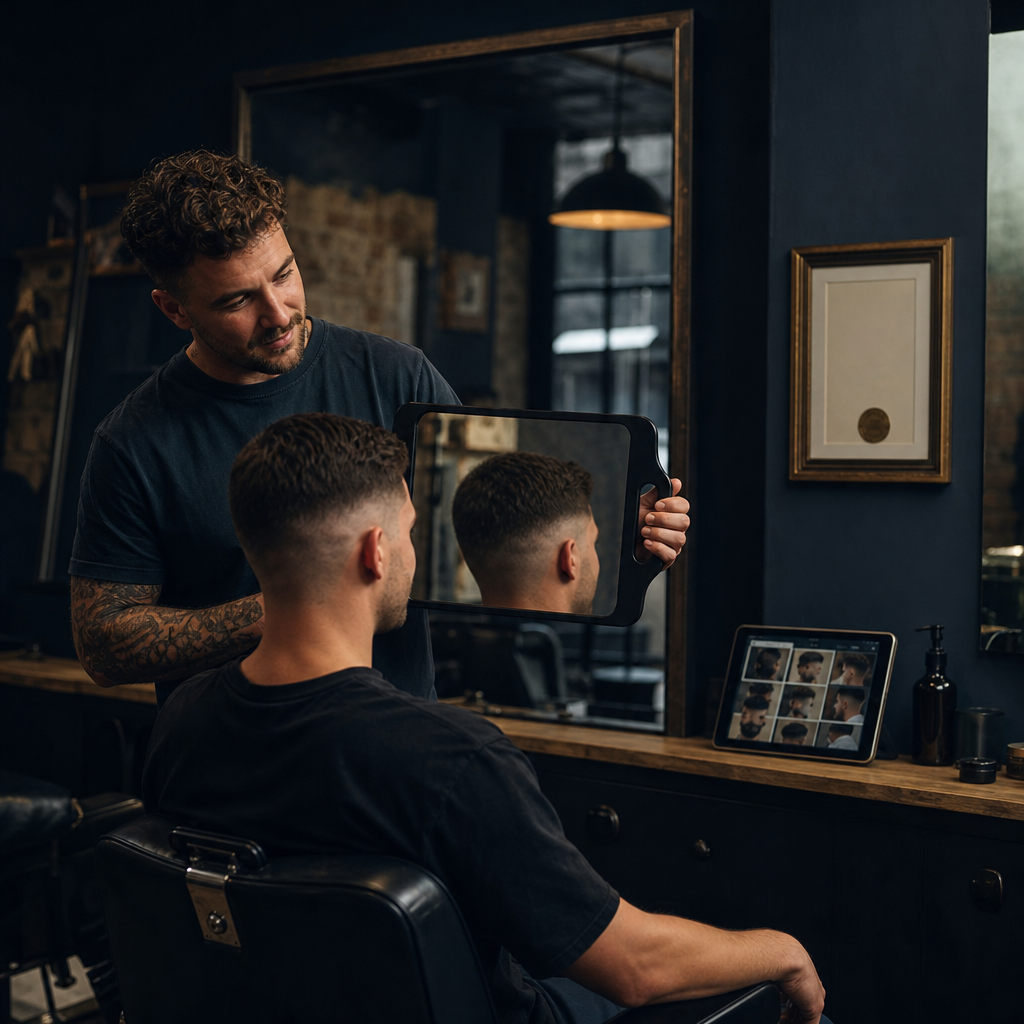
The most persuasive photo is usually the team working. Get written or clear verbal consent from staff and clients before you photograph or publish them. Where a client does not want to be shown, shoot the barber's hands and the cut from an angle that does not identify them.
Never use stock images
Stock barbershop photos are shiny, symmetrical and empty. They suggest a shop that does not exist. If your real shop looks modest, that is fine. A real small shop beats a fake slick one, because the barber who applies will already know what they are walking into.
Refresh them
Take new photos whenever you change a fit-out, add a chair or change the team. A shop that looks different to its photos on day one breaks trust fast.
Common Profile Mistakes
The four mistakes that cost shops the most are blurry phone shots, outdated photos, vague descriptions and overselling. Each one either deters good barbers or attracts the wrong ones. Fixing them takes an afternoon, and it improves both the number and the quality of applicants.
Blurry or dark phone shots. A shaky, underexposed image says the shop is careless. Retake it. It costs nothing.
Outdated photos. If your photos show a team that left last year or a fit-out you have since changed, new barbers feel misled on day one. That mismatch is a leading cause of early exits.
Vague descriptions. Phrases like great culture, competitive pay and friendly team tell a barber nothing. Replace them with specifics: what the day looks like, who the clients are, how bookings work and what support a new barber gets.
Overselling. Promising a full book from week one, or implying a pay range you will not deliver, attracts applicants who leave within weeks. It can also create legal exposure. Check any pay and conditions claims against the Fair Work Ombudsman's guidance and the Hair and Beauty Industry Award before you publish. Honesty builds trust and produces better matches, even if it means fewer applicants.
A useful test: read your profile as a barber who has just left a shop that misled them. Would you trust it?
Pairing the Profile With the Listing
The profile sets the scene and the listing makes the offer, so the two must agree. Link the profile detail to the role, show pay up front and let verified credentials reassure both sides. When the profile and listing match, barbers apply with confidence and shops spend less time sifting.
Link the role to the profile
If the profile says you are known for skin fades and beard work, the listing should say the vacancy is for a barber who wants more of exactly that. If the role is trial-to-permanent, say how long the trial runs, how it is assessed and what permanent looks like. The barber should never have to guess whether the listing and profile describe the same shop.
Show the pay
Barbers dislike guessing at pay. Showing it up front respects their time and filters out mismatches on both sides. On BarberRise, pay is shown up front by design, which is part of the point of a board built for one trade rather than a general board to trawl.
Let verified credentials do the work
On BarberRise, credentials are checked before a barber's profile shows as verified. Applications arrive with portfolio and experience attached, and roles go straight to barbers already screened for them. That means your photos and profile are talking to people who can actually do the work, rather than a pile of unscreened applicants.
If you are hiring in a city where overseas barbers are heading, you can also see barbers from the UK, Canada and New Zealand who are planning a move, months before they reach the open market. The Australia Ready pass helps them get ready to cut here. BarberRise never gives visa advice. Any visa questions go to a registered migration agent.
What it costs
Posting a role on BarberRise is free. There is 0% agency commission, never a percentage of wages, and the first placement is free for founding shops. You can build your shop profile and post your first role at no cost. Hire your way.
What Ten Years in the Trade Taught Us About First Impressions
Our view is that an employer profile is a filter, not an advertisement. Its job is not to attract everyone, but to help the right barber recognise your shop and the wrong barber walk past it. That belief comes from the founder's years behind the chair and in the manager's seat.
Justin, BarberRise's founder, has ten years in the trade and has managed three shops. He ran an academy inside his Canadian shops and trained barbers from scratch. Those barbers were poached within months. The lesson was not to stop training. It was that hiring and retention are tied to fit, and fit starts with honesty about what the shop is. A barber who knows exactly what they are walking into stays longer than one who was sold a shinier version.
Later, running Black Sheep Barbershop on the Gold Coast, he lived the other side: 6am opens, no-shows, staff hunts, and trying to keep every chair filled while still stepping away from the chair now and then. Facebook groups, DMs and generic job boards produced plenty of noise and not much signal. He built BarberRise inside his own shop for that reason. A full shop runs itself. An empty chair runs you.
Three things stand out from that experience.
First impressions are made before the interview. Most shop owners think the interview is where they sell the job. In practice, barbers have already decided whether you are worth the trip based on what they could see. By the time they walk in, you are confirming, not convincing.
Small, honest shops win on specifics. A big chain can outspend you on branding. It cannot match a real photo of your actual team and a clear description of your actual clientele. For independents, that specificity is the competitive edge.
Culture shows in the details. Tidy stations, tools laid out properly and a team that looks like it enjoys working together say more than any slogan. This is also why we care about a career behind the chair, not just a grind. Shops that look after their people and their space attract barbers who want to build something over years. That is education that outlasts hustle culture, and it starts with the first photo they see.
Build Your Shop Profile and Post Your First Role
Build your shop profile and post your first role free on BarberRise, with no agency commission. Founding shops get their first placement free. Add your shop story, your specialisations, your real photos and your chair type, and show barbers the chair before they apply. Find your chair. Rise together.
References
- Fair Work Ombudsman, guidance on employees and independent contractors: https://www.fairwork.gov.au
- Fair Work Commission, Hair and Beauty Industry Award 2020 (MA000005): https://www.fwc.gov.au
- Google Business Profile Help, photo and video guidelines: https://support.google.com/business
Frequently asked questions
What should a barbershop employer profile include?
Include your shop story, services and specialisations, clientele, team size, booking system and the chair types you offer, such as full-time, trial-to-permanent, rostered, short cover or rent-a-chair. Add real photos of your stations, tools, team and street front so barbers can see the shop as well as read about it.
What photos should I use on a barber job listing?
Use photos of your own shop: the street front, stations, tools, lighting and the team at work, with consent from anyone shown. Shoot in natural light with a clean phone lens, and tidy the benches first. Avoid stock images, which signal you have nothing real to show.
Can I use stock photos on a barbershop job ad?
You can, but you should not. Barbers recognise stock images quickly, and they suggest a shop that does not exist. A modest real photo is more trustworthy than a polished fake one, and it leads to better matches because applicants know what they are walking into.
How often should I update my shop photos?
Update them whenever something meaningful changes: a new fit-out, a new chair, a change in team or new signage. Photos that no longer match the shop create a bad first day for a new barber and can lead to early exits.
Does it cost anything to post a barber job on BarberRise?
No. Posting a role on BarberRise is free, and there is 0% agency commission, never a percentage of wages. Founding shops also get their first placement free.
Find a chair near you

BarberRise
The team building Australia's job platform for barbers and barbershops.
Keep reading
barber qualifications and experience requirements
Barber Qualifications and Experience Requirements: What Australian Shops Ask For and How to Show You Meet Them
17 min read
visa sponsorship jobs
Visa Sponsorship Barber Jobs in Australia: What Overseas Barbers and Hiring Shops Need to Know
17 min read
full-time barber jobs
Full-Time Barber and Hairdressing Jobs in Australia: How to Find a Permanent Chair Worth Keeping
17 min read