
Hairdressing jobs in Australia are listed on general boards like Seek and Indeed, but hairdressers who want barbershop work are better served by a trade-only board. BarberRise lists only barbershop chairs, shows pay up front and checks credentials, so qualified or apprentice hairdressers can search by city and skip unrelated salon listings.
Plenty of hairdressers already cut men's hair every day. Fades, tapers, skin work and beard tidy-ups are part of their week, yet the job ads they scroll past are built for colourists, bridal stylists and salon managers. Hours go into sifting listings that were never meant for them.
This page is the hub for our hairdressing jobs by city cluster. It covers why hairdressers are moving to the barbershop chair, which skills carry over, how each major market looks, how to read a pay offer, and how shop owners can write a listing that gets crossover hairdressers to apply. BarberRise is only for barbers and barbershops, and this guide is written with that in mind.
Key Takeaways
- Many hairdressers already hold the core skills a barbershop needs. The usual gaps are speed on skin fades, clipper-over-comb finish and razor work.
- Barbershops run on walk-ins and repeat male clients, which suits hairdressers who want steadier flow and a different shop culture.
- Choose your chair type before you choose your shop. Full-time, trial-to-permanent, rostered, short cover and rent-a-chair suit different situations.
- Read pay offers by structure first: wage, commission, rent or a mix. Always ask what is paid on top of the headline figure.
- Shop owners attract crossover hairdressers by showing pay, chair type and training support in the listing itself.
- Posting a role on BarberRise is free, commission is 0%, and founding shops get their first placement free.
Built only for barbers and barbershops
Barbers: tell us where you want to cut and when, and shops see you first. Shops: post a role free, and your first placement is free as a founding shop.
Get startedSummary Table: Chair Types at a Glance
| Chair type | How you are usually paid | Suits | Watch for |
|---|---|---|---|
| Full-time | Employee wage, sometimes plus commission | Hairdressers wanting stability and a long-term shop home | Check award coverage and how commission is calculated |
| Part-time or rostered | Employee wage for set shifts | Hairdressers keeping a salon job or a second income | Roster fairness and guaranteed hours |
| Casual or short cover | Casual employee rate for the shifts worked | Testing a shop, filling gaps, building a book | Shift notice and how clients are allocated |
| Trial-to-permanent | Paid trial, then a permanent offer | Both sides wanting to check fit before committing | Written terms for the trial and a clear decision date |
| Rent-a-chair | You pay for the chair and keep your takings | Experienced cutters with a client base | You are a business, not an employee, so tax, insurance and contract terms are yours to manage |
Why are hairdressers searching for barbershop jobs?
Hairdressers move to barbershops mainly for three reasons: steadier walk-in flow, strong demand for men's grooming, and a different shop culture. Barbershops tend to be built around quick, repeat appointments rather than long chemical services, which changes the rhythm of the day and the way a client book grows.
Steadier walk-in flow
Many salons run on booked appointments, and a gap in the diary is dead time. A barbershop with a strong location fills chairs from the street. Our founder's view, after ten years in the trade and three shops managed, is blunt: a full shop runs itself. An empty chair runs you. Walk-in traffic is a large part of what keeps chairs full.
Men's grooming demand
Men's grooming is now a category of its own, with clients who book regular cuts and tidy-ups on a short cycle. Hairdressers who already enjoy men's cutting find that a barbershop lets them do more of it, with a client base that returns often.
A different shop culture
Barbershops are social places. The conversation, the music and the pace are different from a typical salon floor. Some hairdressers find that a better fit. Others prefer the salon. Both are valid, and the move is worth trialling before you commit to it.
Which hairdressing skills transfer to a barbershop chair?
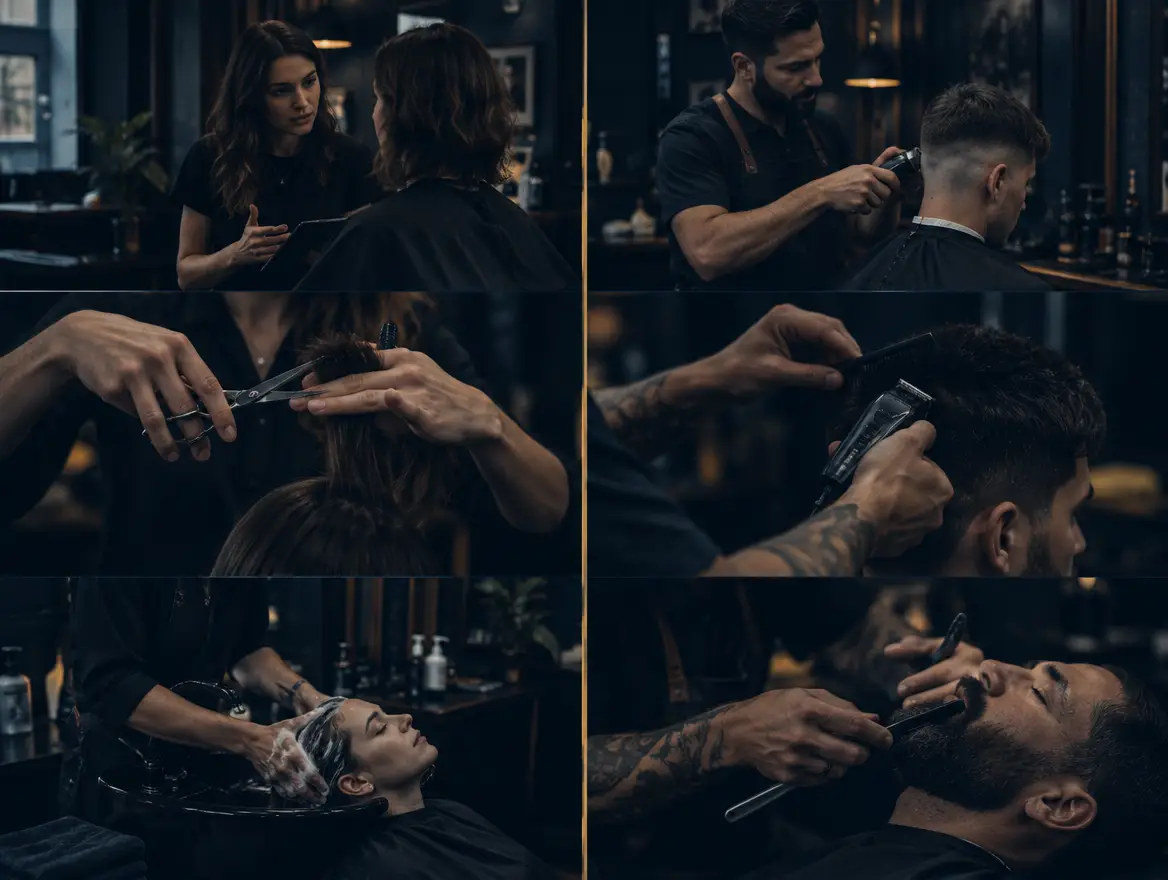
Most of the foundation transfers: consultation, scissor work, hair types and textures, face shapes, sanitation and client retention. The gaps are usually speed on skin fades, clipper-over-comb finish and razor or beard work. Close those gaps and a qualified hairdresser can be chair-ready quickly.
What carries over:
- Consultation and reading what a client actually wants
- Scissor-over-comb and layering control
- Understanding growth patterns, cowlicks and density
- Hygiene and client care
- Rebooking and building a regular client book
- Men's colour and grey blending, which many barbershops now offer
Where to fill the gaps:
- Fades: clean skin and low-to-high blends take repetition. Practise on mannequin heads, then on model nights.
- Clipper-over-comb: the speed and precision of a barber's finish is a different muscle memory from scissor work.
- Beard and razor work: shaping, line-ups and hot-towel shaves are core barbershop services.
- Pace: a barbershop day is often a run of shorter services, so timing matters.
We cover formal training paths in our guide to the required qualifications for barber jobs in Australia, so we will not repeat it here. The short version: show what you can do. A practical trial cut often counts for more than a certificate. Our barber interview advice explains how to prepare for one.
Where are the barbershop jobs for hairdressers? A city-by-city overview
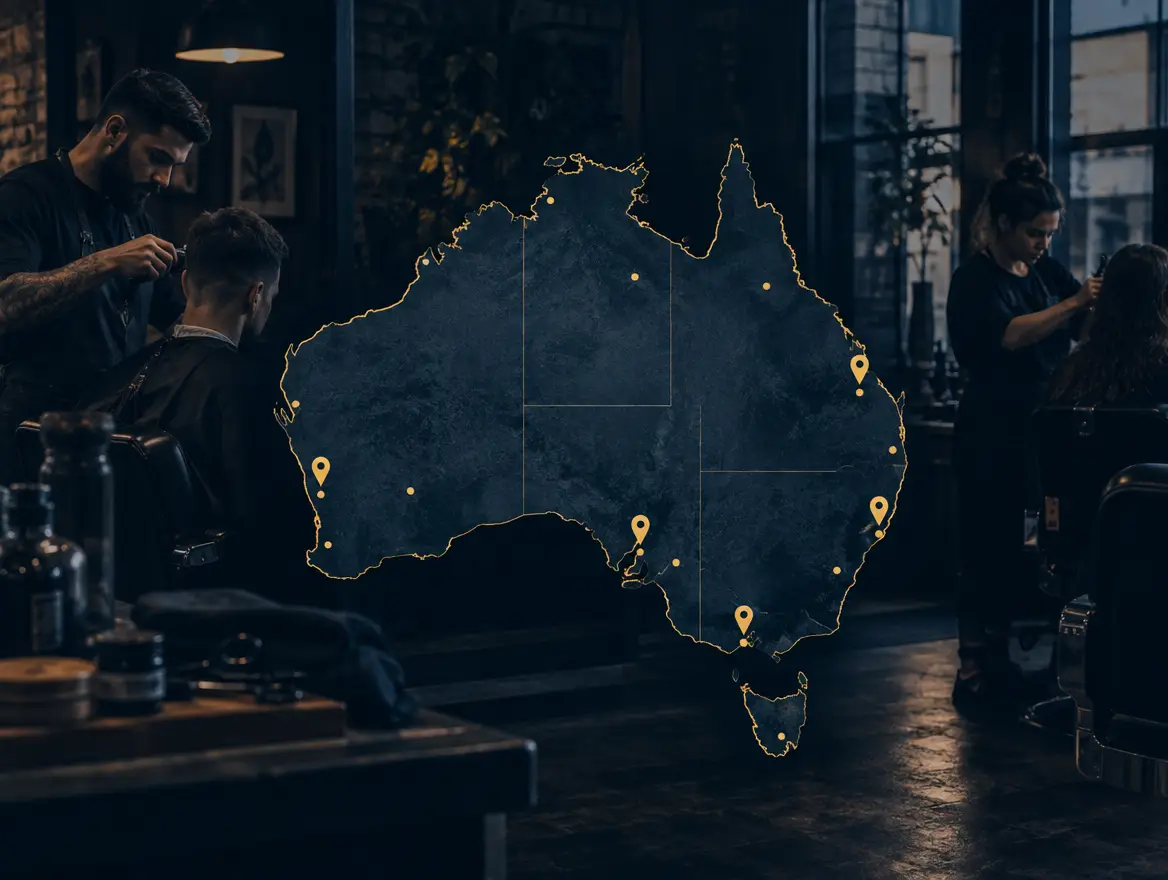
Barbershop jobs for hairdressers sit in every capital city and in many regional centres. Each market has its own mix of shop types and client expectations. BarberRise has a dedicated hairdressing jobs page for each major city, so you can browse chairs near you instead of trawling national listings.
Sydney
Sydney is spread across dense inner suburbs and large outer regions, so the shop type changes quickly as you move. Inner-city shops often lean towards premium, appointment-led work. Suburban shops lean towards walk-ins and family trade. If you are searching for hairdresser jobs near me in Sydney, define your travel radius first, then look for the chair type that matches it. See the Sydney hairdressing jobs page for current chairs.
Melbourne
Melbourne has a strong barbershop and café culture, with shops clustered in many suburban strips as well as the CBD. Hairdressers with an eye for detail and men's styling often do well here. The Melbourne hairdressing jobs page lists chairs by suburb.
Brisbane
Brisbane combines inner-city shops with growing suburbs and a close link to the Gold Coast and Sunshine Coast. Many barbershops here serve a mix of tradies, professionals and families, which rewards versatile cutters. The Brisbane hairdressing jobs page shows current roles.
Perth
Perth is geographically isolated and its labour market is distinct from the east coast. Shops often hire locally and value cutters who plan to stay. Hairdressers moving between states should read the relocation notes in our relocation and visa sponsorship guide. The Perth hairdressing jobs page lists chairs across the metro area.
Adelaide
Adelaide is a more compact market where reputation travels quickly. A strong portfolio and a good trial often matter more than a long CV. The Adelaide hairdressing jobs page shows barbershop roles across the city and suburbs.
Regional centres
Regional shops often struggle to fill chairs, and a hairdresser with strong men's cutting skills can be a real find. Lifestyle moves to coastal and regional towns are common, and some shops will consider short cover or a trial first. The regional hairdressing jobs page groups these roles together, and our Barber Jobs national hub covers the rest of the country.
If you are travelling from overseas, tell shops where you are heading and when. Visa questions always go to a registered migration agent. BarberRise never gives visa advice.
How do you choose your chair type and read pay shown up front?
Choose the chair type that matches your life first: full-time for stability, part-time or rostered for flexibility, casual or short cover for testing a shop, trial-to-permanent for a low-risk fit check, and rent-a-chair if you already have clients. Then read the pay structure before the headline number.
Reading a pay offer
A pay figure means little without its structure. Ask these questions of any listing:
- Is it a wage, a commission split, a chair rent, or a mix?
- If there is commission, what is it calculated on: service price, takings after product, or something else?
- Is there a guaranteed minimum while you build a book?
- Are superannuation and leave included for employees?
- For casual roles, is the casual loading shown separately?
Many barbershop roles fall under the Hair and Beauty Industry Award, so it is worth checking award coverage with the Fair Work Ombudsman before you accept a rate. We do not publish salary figures in this guide. For earnings detail, see our barber salary, pay rates and earnings cluster.
The rent-a-chair question
Rent-a-chair means you are running your own business inside someone else's shop. That can suit an experienced cutter with a loyal client book. It also means you manage your own tax, insurance and contract. If a shop calls a role contracting but controls your hours, prices and clients like an employer, check the Fair Work Ombudsman's guidance on independent contractors. Fades to Fair Work: know where one ends and the other begins.
Why trial-to-permanent suits crossover hairdressers
A paid trial lets you test the shop culture and the pace, and lets the owner see your clipper work. It removes the guesswork for both sides. Get the trial terms, pay and decision date in writing before the first shift.
For shop owners: how do you write a listing that attracts crossover hairdressers?
To attract crossover hairdressers, state the chair type, show the pay structure, name the training support, and say plainly that you welcome qualified hairdressers with strong men's cutting skills. Hairdressers skip vague listings. They respond to clarity, a realistic skills ask and a fair way to prove themselves.
A listing that works includes:
- The chair type, in the first line. Full-time, trial-to-permanent, rostered, short cover or rent-a-chair. Hire your way, and say how.
- Pay shown up front. Structure and amounts, not 'competitive'.
- A skills ask that is honest. If you want solid scissor and clipper work and are happy to coach fades, say so. If you need a skin fade specialist from day one, say that instead.
- A trial process. Describe it: a paid practical shift, a model cut, or a shadow day.
- What the shop is like. Walk-in or appointment-led, team size, music, hours, opening time.
- A clear next step. One action: apply with portfolio and experience attached.
The fastest way to lose a hairdresser is to write a listing that reads like it was copied from a general board. Drop the jargon about 'rockstar team players' and write like you would explain the job to a friend.
How does BarberRise differ from Seek and Indeed?
BarberRise is a trade-only platform. Seek and Indeed list every job in the country, so a hairdresser searching for barbershop work has to filter out unrelated roles by hand. BarberRise sends a role straight to barbers already screened for it, shows pay up front and checks credentials before a profile shows as verified.
Our position is simple: we are not Seek. We are not Indeed. We are only for barbers and barbershops. Only barbers, only barbershops.
Here is what that means in practice:
- One trade, not a general board to trawl. Every listing is a chair. You are not scrolling past receptionist and retail roles.
- Applications arrive with portfolio and experience attached. Shops do not need to chase.
- Credentials are checked before a profile shows as verified.
- Pay is shown up front. Both sides can plan.
- Five placement types: full-time, trial-to-permanent, rostered, short cover and rent-a-chair.
- Three steps, both sides. Create your profile, post or browse, connect and work.
- Posting a role is free. BarberRise charges 0% agency commission and never takes a percentage of wages. Founding shops get their first placement free.
The platform is built around three tiers: community, education and job placement. Skills get you started. A community gets you further.
What a shop owner learns after hiring a hairdresser into a barbershop
Hiring a hairdresser with strong clipper skills is often cheaper and faster than training a barber from scratch. The trade-off is a short ramp-up on fades and razor work. The owner who plans that ramp-up properly usually gets a more rounded cutter and a longer-serving team member.
Our founder ran an academy inside his Canadian shops and trained barbers from scratch. He invested in those staff, and many were poached within months. The economics of training people who then walk out the door shaped how BarberRise thinks about recruitment: hire people who are already close to chair-ready, and build retention around them.
Later, as owner of Black Sheep Barbershop on the Gold Coast, he lived the 6am opens, the no-shows and the staff hunts through Facebook groups and DMs. It is hard to step away from the chair when you are also hunting for someone to fill the next one. That is why he built BarberRise inside his own shop.
Now consider a hypothetical. A hairdresser with several years in a mixed salon applies for a trial-to-permanent chair. Her scissor work and consultation are excellent. Her skin fades are slow. A shop that treats that as a fixable gap, pairs her with a senior barber for two weeks and gives her a clear review date, gains a loyal team member who already understands clients. A shop that treats it as a deal-breaker keeps the chair empty.
Our view is that the best crossover hires are not the ones who can already do everything. They are the ones with strong fundamentals, a willingness to learn the barbershop way and a shop that gives them a fair run. That is a career behind the chair, not just a grind.
Find your chair
Hairdressers: create a verified profile on BarberRise, then browse barbershop chairs in your city. Add your portfolio, your experience and the chair type you want. Rise together.
Shop owners: post a role free. There is 0% commission, no percentage of wages, and your first placement is free if you are a founding shop.
References
- Fair Work Ombudsman, Hair and Beauty Industry Award [MA000005] summary
- Fair Work Ombudsman, Independent contractors
- Australian Government, Job Outlook
- Australian Government, training.gov.au
Frequently asked questions
Can a hairdresser work in a barbershop in Australia?
Yes. Many barbershops hire hairdressers who have strong men's cutting and clipper skills. Requirements vary by shop, so expect a practical trial cut and possible coaching on fades and razor work.
How do I find hairdresser jobs near me?
Search by city on a trade-only board rather than a general one. On BarberRise, choose your city page, set the chair type you want and check that pay is shown. This avoids sifting unrelated salon listings.
What is the difference between a hairdresser and a barber?
Hairdressers typically work across a broad range of services, including colour and chemical work. Barbers focus on men's cutting, fades, clipper work, beard shaping and shaving. Many cutters do some of both.
How much do barbers earn compared with hairdressers?
It depends on chair type, location, client book and pay structure. Check award coverage with the Fair Work Ombudsman and read BarberRise's barber salary, pay rates and earnings guides.
Is it free to post a barber job on BarberRise?
Yes. Posting a role is free, BarberRise charges 0% agency commission and never takes a percentage of wages. Founding shops also get their first placement free.
Find a chair near you
Every city, by state: barber jobs in Australia and hairdressing jobs in Australia. Pay floors and how each pay structure works: what barbers get paid.
Barber jobs by city

BarberRise
The team building Australia's job platform for barbers and barbershops.
Keep reading
hairdressing jobs by state
Hairdressing Jobs by State in Australia: A State-Level Hub for Hairdressers Moving Into Barbershop Chairs
17 min read
active local barber vacancies
Active Local Barber Vacancies in Australia: How to Find Live Chairs Near You and Keep Your Listing Current
17 min read
current barber vacancy counts
Current Barber Vacancy Counts: How to Read Live Job Numbers on City and Region Hubs
15 min read