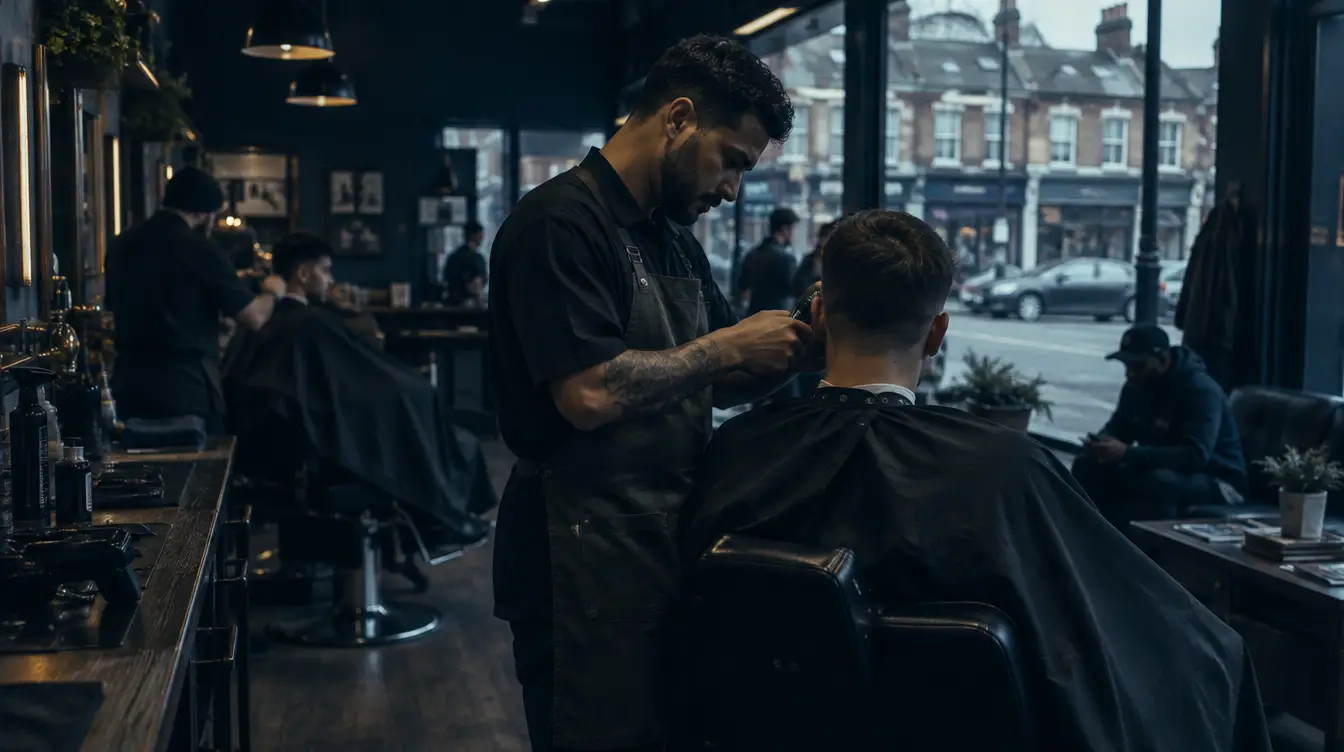
Barbers are hired most actively in four types of suburb: inner-city fringe and hospitality strips, outer growth corridors with new shopping centres, transport-hub suburbs, and regional or coastal centres. Each type hires for different reasons, so check live suburb-level listings rather than relying on city averages.
Barbers do not search for 'barber jobs in Sydney'. They search for 'barber jobs near me', and what they mean is a suburb they can reach by 6am without hating the drive. Shops think the same way. A chair in one suburb can be filled in days while a chair ten minutes away sits empty for months.
This guide explains the suburb patterns behind that gap. It covers why each type hires, how barbers should read a suburb's listings, and how shop owners can stand out when every shop nearby is chasing the same talent. We deliberately name no suburbs as 'the top ten'. We will not publish a ranking we cannot back with live listings.
Key Takeaways
- Barbers think in commutes and catchments, so suburb-level demand tells you more than a city average.
- Four suburb types tend to hire most: hospitality-fringe strips, outer growth corridors, transport hubs, and regional or coastal centres.
- Hiring is driven by population growth, new centre openings, shops adding chairs, and staff turnover. Each leaves a different pattern in the listings.
- Barbers should compare pay shown up front and chair type (full-time, trial-to-perm, rental) before comparing suburbs.
- Shop owners in a hot suburb win by stating pay and chair type clearly, which attracts screened, verified barbers and filters out time-wasters.
- Posting a role on BarberRise is free, agency commission is 0% and never a percentage of wages, and the first placement is free for founding shops.
Built only for barbers and barbershops
Barbers: tell us where you want to cut and when, and shops see you first. Shops: post a role free, and your first placement is free as a founding shop.
Get startedSummary Table: Suburb Types at a Glance
| Suburb type | Main hiring driver | What barbers get | What shops should lead with |
|---|---|---|---|
| Inner-city fringe and hospitality strips | Shops adding chairs, staff turnover | Strong walk-in and after-work trade, varied clients | Clear chair type and a real chance to build a book |
| Outer growth corridors | New centres, population growth | Newer shops, growing catchment, shorter local commutes | Stability, ramp-up support and a long-term path |
| Transport-hub suburbs | Steady foot traffic, turnover | Consistent walk-ins, commuter-friendly hours | Roster clarity and early or late shift detail |
| Regional and coastal centres | Fewer local barbers, seasonal demand | Lifestyle, loyal local clients, less competition | Pay up front, relocation realities and a full-time option |
Why Suburb-Level Demand Matters More Than City Averages
Suburb-level demand matters because a barber's day is shaped by three local things: the commute, the client base and the walk-in traffic. A city-wide average blends all of those together. The result tells you almost nothing about whether a specific chair will suit you or fill for the shop.

A city is not one labour market. It is dozens of small ones. A barber in a sprawling metro area will not take a chair an hour away for a marginal gain. They take the best chair they can reach, which means shops compete for talent suburb by suburb.
Commute decides more than people admit
Barbering means early opens, late closes and standing for hours. Add a long commute and the job wears people down faster. Our founder Justin spent years with 6am opens as the owner of Black Sheep Barbershop on the Gold Coast. His read is blunt: a chair that is close to home gets worked harder and kept longer.
Client base is local
A barber's book is built from people who live or work within a short distance of the shop. If you move suburbs, you are not just changing address. You are rebuilding a clientele. That is why the trade-off between a better chair and a familiar catchment deserves real thought.
Walk-ins vary street by street
Some strips run on bookings. Others live on walk-ins from commuters, shoppers and people finishing a shift. The same barber can earn very differently in each, and a shop that does not say which model it runs wastes everyone's time.
Generic boards flatten all of this. A barber searching for work nearby gets unrelated listings from hospitality, retail and beauty mixed in with the few chairs that matter. A trade-only board keeps the signal.
Which Suburb Types Hire Barbers Most Actively?
Four suburb types tend to show the most consistent barber hiring: inner-city fringe and hospitality strips, outer growth corridors, transport-hub suburbs, and regional or coastal centres. These are patterns, not a ranking. Specific suburbs only belong in this conversation when current listings support them.
Inner-city fringe and hospitality strips
These are the suburbs just outside the CBD where cafes, bars and gyms cluster. Foot traffic is steady, clients care about style, and shops tend to be competitive. Hiring here often comes from shops adding chairs or replacing barbers who moved on. Competition for good barbers is fierce, so the shop that explains its chair clearly tends to fill first.
Outer growth corridors with new shopping centres
New housing estates bring new shopping centres, and new shopping centres bring new barbershops. These suburbs hire because the catchment is growing faster than the supply of barbers. For a barber, the appeal is a newer shop, a rising client base and often a shorter commute from where you already live. The risk is a shop still finding its feet.
Transport-hub suburbs
Suburbs built around major stations and interchanges see constant movement. Commuters want a quick cut before or after work. That means consistent walk-in trade, but it also means demanding hours. Turnover can be higher, so these shops often hire repeatedly. Roster detail matters more here than anywhere else.
Regional and coastal centres
Regional towns and coastal centres often have fewer qualified barbers per head of population. Local clients are loyal, and competition is lighter. Some centres also carry seasonal demand. Shops here frequently struggle to fill chairs because the pool of local barbers is small. That is where barbers moving from another city, or another country, can find a real opening.
We are not going to tell you which suburb is number one. A list like that goes stale quickly and invites guesswork. What stays useful is knowing which type of suburb matches the way you want to work.
What Drives Hiring in Each Suburb Type?
Hiring in a suburb is driven by four things: population growth, new centre openings, shops adding chairs and staff turnover. Different suburb types lean on different drivers. Knowing which one is at work tells a barber how stable the chair is, and tells a shop owner who it is really competing against.
Population growth
The Australian Bureau of Statistics publishes regional population data that shows where growth is concentrated. Fast-growing outer suburbs and some regional centres add residents faster than they add barbers. More heads means more haircuts, and more demand for chairs. Growth hiring tends to be steadier than churn hiring.
New centre openings
A new shopping centre or hospitality precinct usually opens with a cluster of tenancies. A barbershop is often among them. These openings create a burst of hiring before the doors open, then another when the shop needs a second or third chair. If you can see a centre being built, you can expect barber roles to follow.
Shops adding chairs
A busy shop that adds chairs is the healthiest hiring signal there is. It means demand is exceeding capacity. In hospitality-fringe strips especially, a shop adding a chair usually wants someone who can bring clients, not just fill a seat.
Staff turnover
Turnover is the least flattering driver and the most common one. Consider a shop that loses two barbers in a quarter. It posts urgently, and the ad often reads as desperate. A barber reading it should ask why the chair keeps opening. Our founder learned this from the shop-owner side. He ran an academy inside his Canadian shops and trained barbers from scratch. Those barbers were poached within months. The lesson was that hiring and retention are one problem, and shops that treat them as separate pay for it twice.
How Barbers Should Read a Suburb's Listings
Read a suburb's listings by checking three things in order: whether pay is shown up front, what chair type is on offer, and how that compares with nearby suburbs. A listing that hides pay or leaves the chair type vague is asking you to do the shop's work for it.
Start with pay shown up front
A listing that states pay lets you decide in seconds. One that says 'competitive' makes you apply, wait and negotiate before you learn anything. This guide does not cover pay tables, because pay varies by shop and award coverage. What matters is whether the number is visible. Barbers employed under an award should also check the Fair Work Ombudsman's pay information. Most barbershop employees fall under the Hairdressing and Beauty Services Award 2020, though you should confirm your own situation with Fair Work.
Check the chair type
Chair type changes the whole job. BarberRise supports five placement types:
- Full-time: a regular roster and, usually, regular employment.
- Trial-to-permanent: a trial period with a path to a permanent chair.
- Rostered: set shifts, often part-time or flexible.
- Short cover: temporary cover for leave or a busy period.
- Rent-a-chair: you run your own book and pay for the chair.
A full-time chair in a growth corridor and a rent-a-chair in a hospitality strip are not the same decision. Rent-a-chair in particular has tax and legal implications. The Australian Taxation Office explains the difference between an employee and a contractor, and it is worth reading before you sign anything.
Compare nearby suburbs, not just the first listing
Before you commit, map the suburbs within a commute you would actually tolerate. Then compare:
- Chair types on offer across the cluster.
- Whether pay is stated or hidden.
- How long the same role has been listed.
- Whether the suburb type suits your style (walk-in volume, booked clients or a mix).
A role that has been open a long time may mean the shop is slow to hire, the terms are weak, or the suburb is hard to staff. Ask about it.
Why a trade-only board helps
On a generic board, 'barber jobs near me' returns a mix of barbers, hairdressers, retail assistants and beauty roles. On BarberRise, every listing is for a barbershop chair, so the suburb view stays clean. That is the real advantage: you see actual demand without sifting through noise.
How Shop Owners Stand Out in a Hot Suburb
Shop owners stand out in a competitive suburb by stating pay and chair type clearly in the listing. Clear terms attract barbers who already fit the role and repel those who do not. The result is fewer, better applications from screened, verified barbers instead of a pile to sift.
Say what the chair is
If you want a full-time employee, say so. If the role is trial-to-perm, say how the trial works. If you offer rent-a-chair, state the terms plainly. Barbers in a hot suburb have options, and vague listings lose them to the shop that was specific.
Show pay up front
Hiding pay does not protect your budget. It just costs you the barbers who would not apply without it. Showing pay up front means the applicants who arrive already accept the range.
Write for the barber, not the algorithm
A good listing covers the suburb, the clientele, the roster, the chair type and the pay. It sounds like a shop owner talking to a peer, not a corporate template. On BarberRise, applications arrive with portfolio and experience attached, so the listing only needs to do one job: attract the right person.
Retain as hard as you hire
In a hot suburb, barbers get approached constantly. Filling a chair is half the work. Keeping it filled is the rest. A full shop runs itself. An empty chair runs you. Clear terms at the start reduce the surprises that cause early exits.
Know the cost of posting
Posting a role on BarberRise is free. Agency commission is 0% and never a percentage of wages. The first placement is free for founding shops. That matters in a suburb where you may need to hire more than once.
We will say it plainly: we're not Seek. We're not Indeed. We're only for barbers and barbershops. A board built for one trade, not a general board to trawl.
A Quick Checklist for Both Sides
This checklist covers the points that decide most suburb-level hiring outcomes. Barbers use it before applying and shop owners use it before posting. If you can tick every item, you are far more likely to find the right chair or the right barber quickly.
For barbers
- Pick two or three suburbs within a commute you would genuinely accept.
- Identify the suburb type and ask whether its trade pattern suits you.
- Look for pay shown up front. Be cautious where it is hidden.
- Confirm the chair type: full-time, trial-to-perm, rostered, short cover or rent-a-chair.
- Check how long the role has been listed, and ask why.
- If renting a chair, read the ATO's guidance on employees and contractors.
- Keep your profile, portfolio and credentials ready to attach.
For shop owners
- State the chair type in the first line of the listing.
- Show pay up front.
- Name your suburb type and trade pattern honestly (walk-ins, bookings, commuter hours).
- Describe the roster, including early and late shifts.
- Explain the trial or rental terms if they apply.
- Plan for retention before you post, not after the chair is filled.
- Check your obligations under the relevant award and Fair Work rules.
The process on BarberRise
The process is three steps for both sides: create your profile, post or browse, then connect and work. Barbers build a profile and browse by location and chair type. Shops post a role and receive applications from barbers screened for it.
What Running Three Shops Taught Us About Catchments
The most useful lesson from running shops is that your suburb decides who applies before you write a word of the listing. A shop in a commuter suburb attracts commuters who want certain hours. A shop in a growth corridor attracts barbers who want to build. Fight the suburb and you lose. Write to it and you win.
BarberRise comes from ten years in the trade and three shops managed. Our founder, Justin, ran an in-house academy in his Canadian shops, trained barbers from scratch, and saw them poached within months. Later, as owner of Black Sheep Barbershop on the Gold Coast, he lived the 6am opens, the no-shows and the staff hunts through Facebook groups and DMs. He built BarberRise inside his own shop to fix exactly that.
Here is our contrarian position, and we hold it firmly: chasing the suburb with the most listings is the wrong move for most barbers. Heavy listing volume often signals churn, not opportunity. A quieter suburb with one well-written, clearly priced full-time chair can be a far better career move than a busy strip with six desperate ads.
The same applies to shops. If every shop on your strip is hiring, you are not short of barbers. You are short of reasons for a barber to choose you. Clear pay, a clear chair type and a clear path are those reasons.
Consider a hypothetical barber weighing two suburbs. One has many listings with vague terms. The other has two listings with pay and chair type stated. The second is the lower-risk choice, because the shop has already shown how it treats the people it hires.
There is also a longer view. Education that outlasts hustle culture matters, and so does choosing a chair that still works in year fifteen. A suburb with a manageable commute, a healthy client base and a shop that respects your body is a career behind the chair, not just a grind. Skills get you started. A community gets you further.
For barbers moving from the UK, Canada or New Zealand, location matters even more. BarberRise lets those barbers tell shops where they are heading and when, so shops can see them before they reach the open market. We never give visa advice. Visa questions go to a registered migration agent, and the Office of the Migration Agents Registration Authority (OMARA) lists them.
Find Your Chair, or Fill Yours
Barbers: browse BarberRise listings by location and filter by chair type to find your chair in the suburb that suits you. Shop owners: post a role free, with 0% commission, and remember that founding shops get their first placement free. Only barbers, only barbershops. Rise together.
References
- Australian Bureau of Statistics, Regional population
- Fair Work Ombudsman, Awards and pay information
- Australian Taxation Office, Employee or contractor
- Office of the Migration Agents Registration Authority (OMARA)
Frequently asked questions
Which suburbs hire the most barbers in Australia?
No single suburb wins permanently. The pattern is by type: inner-city fringe and hospitality strips, outer growth corridors with new shopping centres, transport-hub suburbs, and regional or coastal centres. For current, specific suburbs, browse live BarberRise listings by location and filter by chair type.
How do I find barber jobs near me?
Use a trade-only board and search by suburb. Check pay and chair type in each listing, then compare two or three nearby suburbs within a commute you would accept. A trade-only board removes unrelated hospitality and retail results that generic boards mix in.
Is it better to take a barber chair close to home?
Usually, yes, if the chair is otherwise comparable. Barbering involves early starts and long hours on your feet, so a shorter commute helps you last in the trade. A local chair also lets you build a clientele in the area where you actually live.
What is the difference between full-time, trial-to-perm and rent-a-chair roles?
Full-time is a regular roster, usually as an employee. Trial-to-perm starts with a trial period and moves to a permanent chair if it works. Rent-a-chair means you run your own book and pay for the chair. Check ATO guidance on employees versus contractors before agreeing to rent.
How much does it cost a shop to post a barber role on BarberRise?
Posting a role is free. Agency commission is 0% and is never a percentage of wages. The first placement is free for founding shops. Shops choose the chair type that suits them, including full-time, trial-to-permanent, rostered, short cover or rent-a-chair.
Find a chair near you
Every city, by state: barber jobs in Australia and hairdressing jobs in Australia. Pay floors and how each pay structure works: what barbers get paid.

BarberRise
The team building Australia's job platform for barbers and barbershops.
Keep reading

barber jobs by skill
Barber Jobs by Skill and City: How to Match Fades, Beard Work and Razor Skills to Local Demand in Australia
16 min read

job expiry date
Barber Job Expiry Dates: How Long Listings Stay Live and Why It Matters for Barbers and Shops
18 min read

Local barber salary data
Local Barber Salary Data: What Barbers Really Earn by City in Australia and How to Compare Pay
18 min read