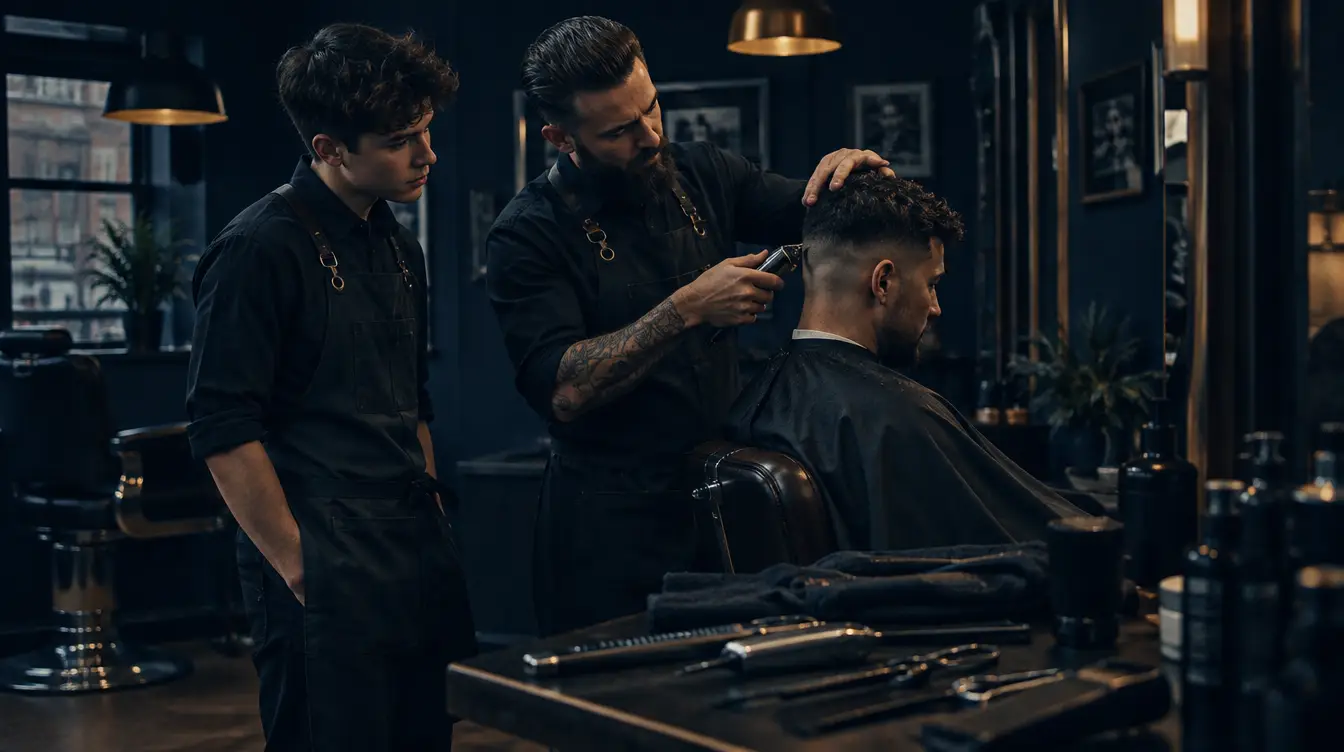
Apprentice hairdresser jobs in Australia are paid training roles where you work in a shop while completing a nationally recognised qualification. If you want to specialise in fades, clipper work and beards, a barbershop apprenticeship towards the Certificate III in Barbering is the most direct route. Pay follows the Fair Work award, so ask for the rate up front.
Most people who search "apprentice hairdresser jobs" land on salon listings and general job boards. Few stop to ask whether a salon is the right place to learn. If you picture yourself behind a barbershop chair, the qualification, the shop and the way you find the job all matter more than the job title.
I have spent ten years in the trade and managed three shops. This guide covers what separates the barbering and hairdressing paths, what a barbershop apprenticeship looks like day to day, how pay works, where to find vacancies, how to choose a shop, and how shop owners can write an apprentice listing that works.
Key Takeaways
- Barbering and hairdressing are separate qualifications. If your goal is a barbershop chair, the Certificate III in Barbering fits most directly.
- A good barbershop apprenticeship is structured: supervised cuts first, then a growing book of clients, with named training and regular feedback.
- Apprentice pay is set by the relevant Fair Work award. Any serious listing should show the pay up front, not "negotiable".
- Generic job boards bury trade roles. A barber-only platform puts your profile in front of shops that are hiring now.
- Ask every shop about training, mentoring, chair type and what happens after sign-off before you accept.
- Shop owners get better applicants when listings state pay, hours, trainer and pathway clearly.
Built only for barbers and barbershops
Barbers: tell us where you want to cut and when, and shops see you first. Shops: post a role free, and your first placement is free as a founding shop.
Get startedApprenticeship Paths at a Glance
This table compares the three common ways people start cutting hair for a living in Australia. It is qualitative on purpose. Lengths and rates vary by state, employer and your circumstances, so confirm details with your Australian Apprenticeship Support Network provider.
| Pathway | Main focus | Best suited to | Typical workplace | Watch out for |
|---|---|---|---|---|
| Barbering apprenticeship (Certificate III in Barbering) | Clipper work, fades, scissor-over-comb, shaves, beards | Anyone who wants a barbershop chair | Barbershops | Shops that call it an apprenticeship but offer no structured training |
| Hairdressing apprenticeship (Certificate III in Hairdressing) | Cutting, colour, chemical services, styling | Anyone drawn to salon work or a broad skill base | Salons, some barbershops | Little barbering floor time in a colour-heavy salon |
| Hairdressing apprenticeship in a barbershop | Mixed, depends on the shop | Those whose employer offers the hairdressing qualification | Barbershops that offer it | Gaps in the barbering skills you actually want |
Apprentice Hairdresser or Apprentice Barber: Which Path Suits a Barbershop Career?
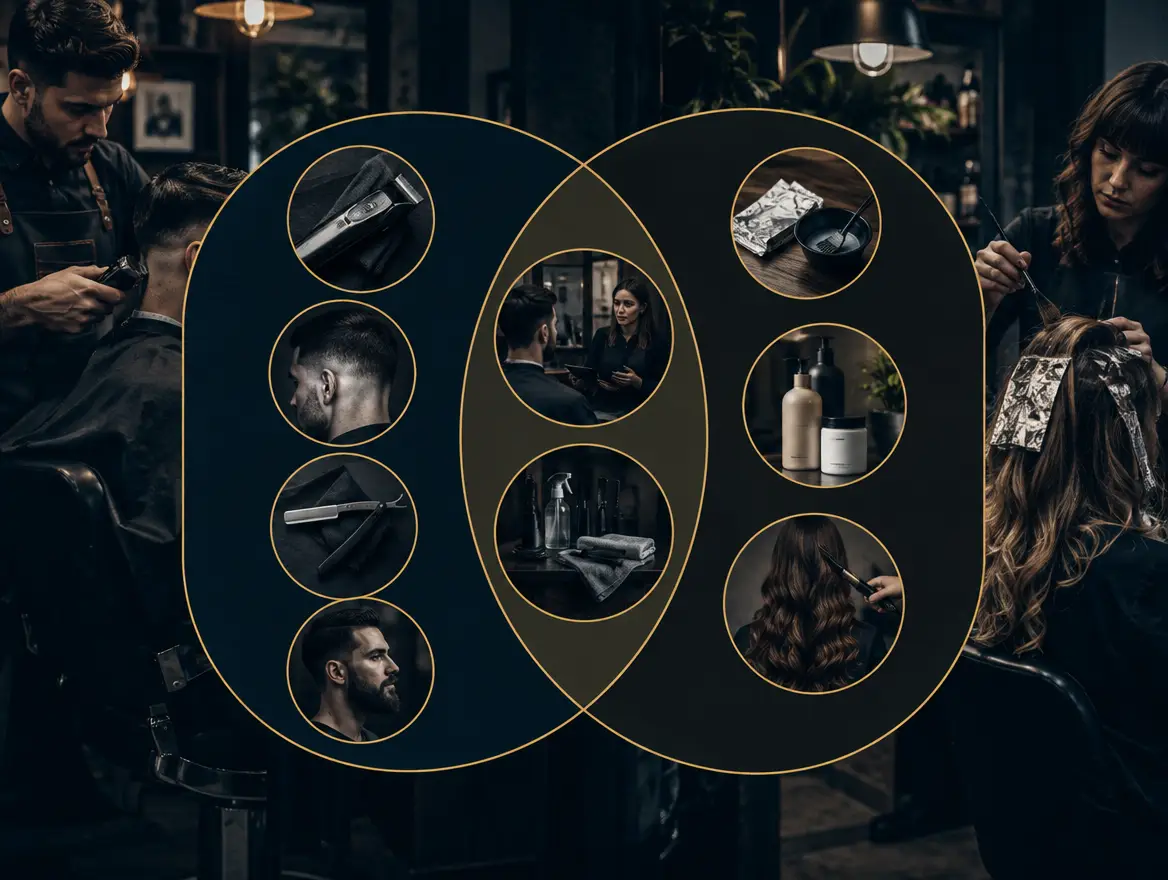
The Certificate III in Hairdressing covers the full range of salon work, including colour and chemical services. The Certificate III in Barbering focuses on clipper work, fades, scissor-over-comb, shaving and beard work. If your goal is a barbershop chair, the barbering qualification fits more directly, though a hairdressing apprenticeship can still lead there.
The two qualifications overlap on consultation, hygiene, scissor fundamentals and client care. They split on emphasis. Hairdressing leans into colour theory, foils, chemical treatments and longer hair. Barbering leans into short hair, tight tapers, skin fades, razor work and beard design. Those are the services that fill a barbershop book.
This matters because the qualification you hold shapes the chair you can step into. A shop hiring a junior barber wants someone who can already hold a clipper line. A hairdressing graduate can learn that, but you will spend your own time catching up on the skills the shop sells every day.
So which should you choose?
- Choose barbering if you know you want to work in a barbershop, build a following on fades and beard work, and eventually run your own chair or shop.
- Choose hairdressing if you want a broader base, like colour work, or you are not yet sure which environment suits you.
- Mix and match only with eyes open. Some shops offer hairdressing apprenticeships because that is the qualification their employer or training provider supports. If that is your option, ask how much barbering floor time you will get.
I will say it plainly: do not pick a qualification because a listing happened to advertise it. Pick the career first, then find the shop that trains for it. The Australian Government's Australian Apprenticeships Pathways site and the national training register (training.gov.au) list the qualifications and the approved training providers.
What Does a Barbershop Apprenticeship Look Like Day to Day?

A barbershop apprenticeship is paid on-the-job training under a qualified barber, combined with formal study through a training provider. You start with sweeping, sterilising and consultations, move to supervised cuts, then build to a full book. The pace depends on the shop, so ask how floor time builds before you sign.
The skills you learn
Expect to build skills in a rough order. Early on, that means hygiene and sterilisation, tool care, client consultation, towel and cape work, and shampoo and finishing. Then come clipper fundamentals, guards, outlines and necklines, followed by tapers and fades, scissor-over-comb and scissor work, and beard shaping and straight razor work.
Fades are the skill most apprentices want first and most underestimate. A clean fade looks simple. It takes hundreds of heads to get consistent. A good trainer will not rush you onto paying clients before you are ready, and will not keep you sweeping for months either.
How supervision works
In a well-run shop, a qualified barber is named as your trainer. They check your work, demonstrate technique and step in when a cut goes sideways. At the start, they might watch every cut. As you improve, supervision loosens to check-ins at key points: after the outline, before the final blend, at the finish.
Supervision is not just about quality control. It is how you learn to talk to clients, handle a complaint, fix a mistake mid-cut and read when a client wants to chat or sit quiet. That is the part no classroom teaches.
How floor time builds up
Floor time is the hours you spend actually cutting hair on real clients. It builds in stages:
- Observation and prep. You watch, set up stations, sterilise tools and run the basics.
- Practice heads. You work on mannequins, staff or willing models, often outside peak hours.
- Supervised clients. You take simple cuts with a barber nearby, often on quieter days or at a discounted price.
- Independent bookings. You carry a growing share of the book, with feedback after each shift.
The risk is a shop that keeps you on stage one. You are cheap labour for the broom and the laundry, and you leave unqualified. Ask any shop how many hours a week an apprentice typically spends cutting by month three. If the owner cannot answer, treat that as an answer.
Part of the apprenticeship also happens off the floor. Your training provider sets study and assessment requirements, and a good employer protects the time to complete them. Ask how that works before you start.
How Much Do Apprentice Hairdressers and Barbers Get Paid?
Apprentice pay in Australia is set by the Fair Work award that covers your shop, usually the Hair and Beauty Industry Award, and it rises as you progress through your apprenticeship. Exact rates depend on your year and circumstances, so check the Fair Work pay calculator and expect any listing to show the pay up front.
I am not going to quote a dollar figure here, because awards are updated and a number printed in a blog post goes stale. The Fair Work Ombudsman publishes the current rates, and its pay calculator will give you the minimum for your situation. Anyone telling you a flat number without pointing to the award is guessing.
What I can say is this. First year apprentice hairdresser pay is the lowest rate you will earn in the trade, and it is meant to be. You are being paid to learn. The rate climbs with each year, and a barber who finishes and builds a book can earn well beyond award minimums. Our barber salary and pay rates guides break down what qualified barbers earn at different stages, so you can see where the first year sits in the whole career.
Why pay should be shown up front
"Pay negotiable" and "competitive rate" tell you nothing. They cost you time. You spend an hour on an application, prepare for a trial and only then find out the rate is not workable.
Showing pay up front does three things. It filters out mismatched applicants before anyone wastes a morning. It signals the shop knows its award obligations. And it protects you from being underpaid. Fades to Fair Work: if a shop will not tell you the rate, or will not point to the award, walk away.
A few practical checks:
- Confirm that your apprenticeship is formally registered with an Australian Apprenticeship Support Network provider.
- Ask which award applies and which classification you will be paid under.
- Ask whether tips, commission or product incentives are on top of the base rate, and get that in writing.
- Look at the Fair Work Ombudsman's guidance if anything in the contract does not match what you were told.
Where Do You Find Apprentice Hairdresser and Barbershop Vacancies?
Look on a platform built for the trade. Seek and Indeed list roles across every industry, so apprentice barber vacancies sit buried under unrelated results, with unclear pay and chair type. A barber-only board puts your profile in front of shops that are hiring now.
Search "apprentice hairdresser jobs" on a generic board and you will see how it goes. Hairdressing apprentice listings sit beside beauty therapist roles, electrical apprenticeships and truck mechanic vacancies. There is no way to filter for barbershops. There is no way to tell a structured apprenticeship from a shop that wants a cheap pair of hands. Barbershop apprentice vacancies get lost.
We are not Seek. We are not Indeed. We are only for barbers and barbershops. That is the point. Only barbers, only barbershops means every role on the board is a chair-based role, and every shop on it understands what an apprentice needs.
Why a trade-only board works better
- Roles are relevant. You are not scrolling past unrelated trades.
- Your profile does the talking. Your portfolio and experience travel with your application, so a shop sees your work, not just a CV.
- Pay is shown up front. You see the rate before you apply.
- Credentials are checked. A profile only shows as verified once credentials have been checked, so shops can trust what they see.
- Chair types are clear. Full-time, trial-to-permanent, rostered, short cover or rent-a-chair: both sides choose the arrangement that suits them.
To be straight about what BarberRise is: it is a job platform for barbers and barbershops, and apprentice roles are posted and found the same way as any other role. There is no special apprenticeship programme to sell you. What you get is a board where the shops are barbershops and the applicants are barbers.
The process is three steps, on both sides:
- Create your profile. Add your experience, portfolio and the kind of chair you want.
- Browse or post. Apprentices browse roles. Shops post them.
- Connect and work. You talk, trial and agree terms directly.
Other routes still work alongside this. Walk into shops with a portfolio of practice work, talk to your training provider and your Australian Apprenticeship Support Network provider, and ask local barbers who is hiring. Barbering is a small world. Word of mouth matters. But start with a board where every listing is yours to read.
If you are comparing cities, our hairdressing jobs city-by-city hub shows where roles are concentrated, and our guide to prominent local barbershop employers can help you build a shortlist of shops worth approaching.
How Do You Choose the Right Shop for Your Apprenticeship?
Choose a shop by what it will teach you, not by how close it is to home. Ask who trains you, how often, how floor time builds, what the pay and chair type are, and what happens at the end of the apprenticeship. Good shops answer these without hesitation.
Your first shop shapes your habits for years. A good one gives you clean technique, a work ethic and a reputation. A poor one gives you bad clipper habits and a gap in your CV. Treat the trial shift as a two-way interview. You are assessing them as much as they are assessing you.
Questions to ask about training and mentoring
- Who is my named trainer, and how many hours a week will they be on the floor with me?
- How often do I get feedback, and is it formal or just a nod across the shop?
- How many hours a week will I spend cutting by month three, and by month six?
- Do I get protected time for my study and assessments?
- Have you trained apprentices through to completion before? Can I speak to one?
- What happens when I finish? Is there a chair for me?
Questions to ask about the chair on offer
Barbershops offer different kinds of roles, and apprentices should know which one they are being offered:
- Full-time: a standard employed position with regular hours.
- Trial-to-permanent: a trial period first, then a permanent role if it works for both sides. For a first role, this is a sensible way to test fit.
- Rostered: set shifts that suit part-time or study commitments.
- Short cover: fill-in work, better for experienced barbers than a first-year apprentice.
- Rent-a-chair: you pay to use a chair and run your own book. It rarely suits an apprentice, because an apprenticeship is an employment arrangement with training obligations.
Both sides of the chair benefit from clarity. If a shop offers you "rent-a-chair" and calls it an apprenticeship, ask hard questions and check with your Australian Apprenticeship Support Network provider.
Preparing for the trade test and trial shift
Most shops will ask for a trade test or trial shift. Bring your tools, clean and sharp. Dress the part. Arrive early. Take direction, ask questions and keep your station tidy. Shops watch how you handle small things: sterilising between clients, greeting people, recovering from a mistake. Technique can be taught. Attitude is much harder to fix.
For Shop Owners: How Do You Write an Apprentice Listing That Attracts Serious Applicants?
A strong apprentice listing states pay, hours, who trains the apprentice, the qualification on offer and what happens after sign-off. Serious applicants scan for these facts first. Vague listings attract volume, not quality, and you spend your evenings sifting.
I have run shops with six-in-the-morning opens, no-shows and the constant hunt for staff. When you are cutting all day, a messy applicant pile is the last thing you need. A clear listing does the screening for you.
What to include
- The pay. State the rate or the award classification. Do not hide it.
- The qualification. Say whether this is a barbering or hairdressing apprenticeship, and who the training provider is, if you have one.
- The trainer. Name the role of the person who will train them and how much time they will spend with the apprentice.
- The chair type. Full-time, trial-to-permanent or rostered. Be specific.
- The hours. Include early opens, Saturdays and late nights. Applicants who know up front will not drop out later.
- The pathway. Say what happens after sign-off, whether that is a chair, a raise or a conversation.
- What you expect. Punctuality, appearance, attitude, willingness to learn.
- How to apply. Ask for a portfolio and a short note on why they want to be a barber.
What to leave out
Skip the "rockstar ninja" language. Skip "must have 3 years experience" on an apprentice role. Skip anything that signals you want free labour. Serious applicants read these as red flags.
The cost of posting
Posting a role on BarberRise is free. There is no agency commission: 0%, never a percentage of wages. For founding shops, the first placement is free. Applications arrive with portfolio and experience attached, and credentials are checked before a profile shows as verified. That is what a board built for one trade does that a general board to trawl cannot. Hire your way: pick the chair type that suits your shop and let applicants come to you.
A full shop runs itself. An empty chair runs you.
Why Training an Apprentice Is a Retention Decision, Not a Favour
Most owners treat taking on an apprentice as charity or as cheap labour. Both views lose. Training is a hiring strategy, and it only pays off if you design for keeping the person you train. I learned that the hard way.
In my Canadian shops I ran an academy inside the business and trained barbers from scratch. I invested real time and money in developing new staff. Within months, many of them were poached by other shops that had put in none of the work. The economics were brutal: I paid for the training, someone else collected the result.
That experience shaped everything I now think about recruitment. Three lessons stand out.
Training without a pathway is a gift to your competitors. If an apprentice finishes and there is no chair, no progression and no sense of belonging, they will go where there is. Tell them from day one what the road looks like.
Technique alone does not keep people. The barbers who stayed longest were not the ones I paid the most. They were the ones who felt part of something: a shop with standards, a team that shared knowledge, and a clear path to a bigger book. Skills get you started. A community gets you further.
Apprentices should get more than a grind. The old model of long hours, no ergonomics advice and constant hustle burns people out by year five. A career behind the chair, not just a grind, means teaching apprentices about posture, hand and wrist health, pricing, rebooking and building a clientele. That is education that outlasts hustle culture, and it is what keeps a barber in the trade at year fifteen.
For apprentices, the takeaway is to ask the shop what happens after sign-off, and to judge the answer. For owners, it is to decide before you hire whether you are building a team or running a revolving door. When I built BarberRise inside my own shop on the Gold Coast, it was to give shops a way to hire barbers already screened for the chair, and to give barbers more than a pay slip. Rise together.
Ready to Find Your Chair?
Apprentices: create a free BarberRise profile and get matched with barbershops hiring apprentices near you. Find your chair.
Shops: post your apprentice role free, with no commission on wages.
References
- Fair Work Ombudsman, Pay and Conditions Tool (Pay Calculator)
- Fair Work Ombudsman, Awards
- Australian Government, Australian Apprenticeships
- Australian Government, training.gov.au National Register of VET
Frequently asked questions
Can you do a barber apprenticeship in Australia?
Yes. You can complete an apprenticeship working towards the Certificate III in Barbering with a barbershop employer, combining paid on-the-job training with formal study through a training provider. Your employer and an Australian Apprenticeship Support Network provider handle the registration. Availability varies by state and shop, so ask local barbershops and check the Australian Apprenticeships website.
How much do first year apprentice hairdressers earn?
First year pay is set by the relevant Fair Work award, usually the Hair and Beauty Industry Award, and depends on your circumstances. The Fair Work Ombudsman's pay calculator shows the current minimum rate. Any employer should be able to tell you the rate and the award classification before you accept the job.
Is the Certificate III in Barbering the same as the Certificate III in Hairdressing?
No. They are separate qualifications with some shared fundamentals. Hairdressing includes colour and chemical services across a wide range of hair types. Barbering focuses on clipper work, fades, scissor-over-comb, shaving and beards. If you want to work in a barbershop, barbering is the closer fit.
Do I need experience to get an apprentice barber job?
No. Apprenticeships are designed for people starting out. Shops look for attitude, reliability and a genuine interest in the craft. Practice work on friends or mannequins, a tidy portfolio and a good trial shift help you stand out, but no formal experience is required.
Can I switch from a hairdressing apprenticeship to barbering?
Often you can talk to your training provider and Australian Apprenticeship Support Network provider about your options, including whether any prior learning can be recognised. Outcomes depend on your provider, employer and state, so there is no guarantee. Raise it early, before you have invested more time in the wrong path.
Where can I find barbershop apprentice vacancies?
Start with a platform built only for barbers and barbershops, so roles are relevant and pay is shown up front. Also approach local shops directly with a portfolio, ask your training provider and apprenticeship network provider about employers, and talk to working barbers. Create a free BarberRise profile and get matched with barbershops hiring apprentices near you.
Find a chair near you
Every city, by state: barber jobs in Australia and hairdressing jobs in Australia. Pay floors and how each pay structure works: what barbers get paid.
Barber jobs by city

BarberRise
The team building Australia's job platform for barbers and barbershops.
Keep reading

hairdressing jobs Australia
Hairdressing Jobs in Australia: A City-by-City Hub for Hairdressers Moving Into Barbershop Chairs
14 min read
hairdressing jobs by state
Hairdressing Jobs by State in Australia: A State-Level Hub for Hairdressers Moving Into Barbershop Chairs
17 min read
prominent local employers
Prominent Local Barbershop Employers in Australia: How to Spot the Shops Worth Working For in Your Suburb
16 min read