
An effective Australian barber or hairdresser job ad clearly states the role, location, employment type, pay structure, award classification, required skills and workplace culture. It avoids discriminatory language, explains what candidates will gain and ends with a direct application process. Specific information attracts better-matched applicants and reduces wasted screening.
Introduction
A strong job ad gives qualified candidates enough information to decide whether the chair, clientele and workplace suit them. It also protects the employer by setting accurate expectations about pay, duties, hours and employment conditions. This guide explains how to write that ad for the Australian market.
Competition for capable barbers and hairdressers is not solved by posting the same vague paragraph across multiple boards. Employers need a credible offer, clear selection criteria and a distribution channel used by the trade.
Built only for barbers and barbershops
Barbers: tell us where you want to cut and when, and shops see you first. Shops: post a role free, and your first placement is free as a founding shop.
Get startedKey takeaways
Effective hair and beauty recruitment starts with clarity rather than clever copy. Candidates should understand the position, workplace and application process within their first scan. Employers must also check current Fair Work requirements instead of copying pay information from an old advertisement or employment template.
- Use a specific, searchable title that reflects the actual seniority and discipline.
- Identify the applicable award classification and check current minimum entitlements.
- Show the pay structure, ordinary hours, roster expectations and relevant benefits.
- Separate essential qualifications from skills that can be developed after hiring.
- Describe the shop through evidence, including clientele, services and team practices.
- Finish with a simple call to action and explain what candidates must submit.
Summary table: the essential parts of a job ad
A complete salon job description should answer a practical question at every stage. What is the job, who is suitable, what are the conditions and how does someone apply? The table below is an editing checklist, not a template every employer has to follow word for word.
| Component | What to include | Common pitfall |
|---|---|---|
| Job title | Trade, seniority and employment type | Using vague titles such as "superstar stylist" |
| Opening summary | Location, role purpose and strongest reason to apply | Writing a long history of the business |
| Responsibilities | Regular services, client duties and operational expectations | Listing every possible shop task |
| Qualifications | Mandatory credentials, experience and niche capabilities | Treating every preference as essential |
| Pay and conditions | Pay structure, award context, hours, penalties and benefits | Saying only "competitive salary" |
| Workplace culture | Observable practices, clientele, systems and team support | Making unsupported claims about culture |
| Application process | Required material, contact method and next step | Ending without a clear call to action |
| Compliance review | Classification, entitlements and neutral language | Reusing an outdated advertisement |
What must an Australian barber or hairdresser job ad include?
A credible Australian job ad should identify the employer, workplace location, employment basis, expected duties, essential requirements, pay approach and application method. It must not mislead applicants about conditions or use discriminatory criteria. The underlying position should also comply with the National Employment Standards and any applicable award.
The starting point is an accurate position, not persuasive wording. Confirm whether you need an employee, apprentice or truly independent contractor before advertising. A label in an ad does not determine the legal relationship. The actual working arrangement does.
For many salon and barbershop employees, the relevant modern award is the Hair and Beauty Industry Award 2020, MA000005. Some businesses and old templates still call it the Hair and Beauty Industry Award 2010. Employers should use the current award name and check the current consolidated instrument.
Your compliance review should cover:
- the correct award coverage and classification
- ordinary working hours and proposed roster
- minimum pay obligations and penalty rates
- allowances that may apply to the work
- meal breaks, leave and superannuation obligations
- apprentice arrangements, where relevant
- wording that could unlawfully exclude candidates based on protected attributes
Fair Work requirements change. Do not paste a rate from an old advertisement. Check the Fair Work Ombudsman's current pay tools when the ad is prepared and again before issuing an employment contract.
A job ad is not the employment contract. However, inaccurate promises about salary, flexibility, seniority or duties create mistrust and may expose the employer to legal risk. Keep claims factual and make sure the eventual offer matches them.
How should the job ad be structured?
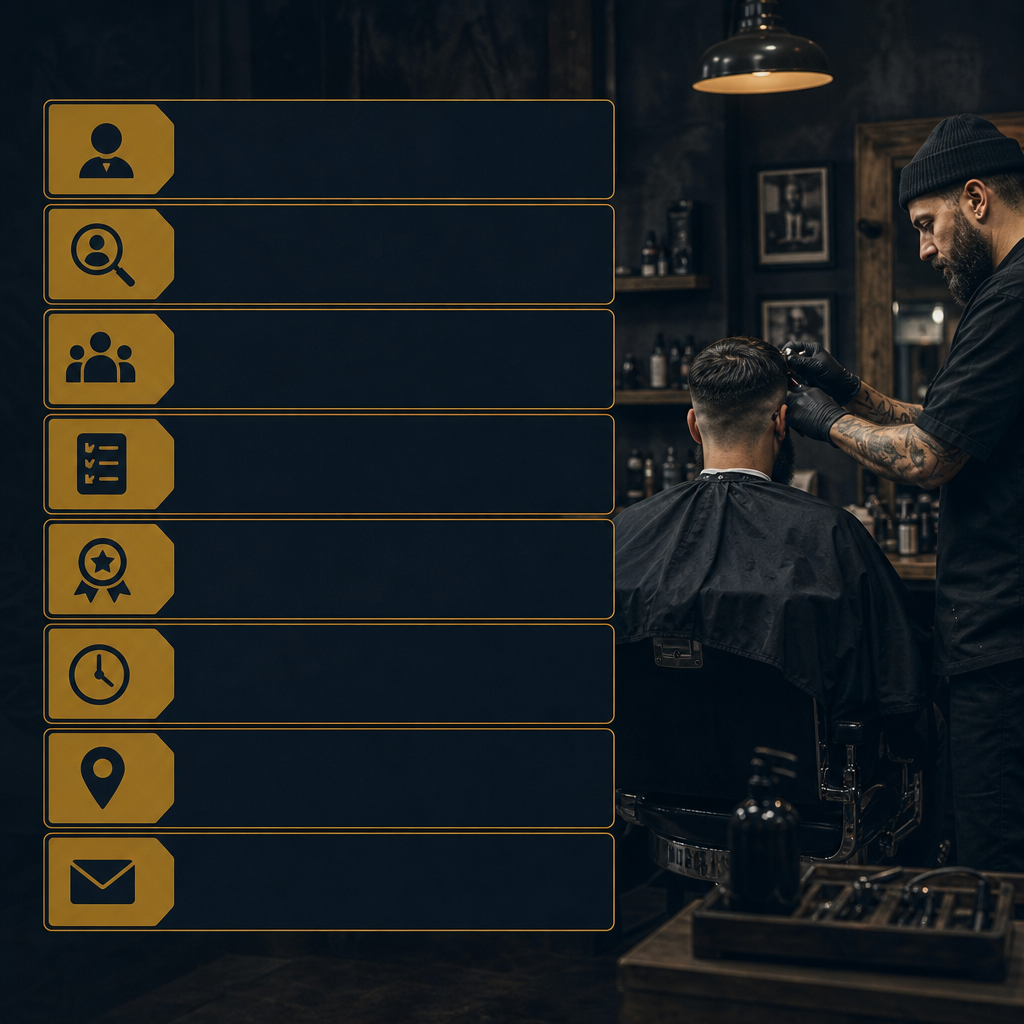
The best structure follows the candidate's decision process: identify the role, establish the value of applying, explain the work, state the requirements, disclose the conditions and provide the next step. Put decision-critical information near the top. Do not make candidates search through promotional copy to find the suburb or employment type.
Use this order:
- Specific job title.
- One-paragraph role summary.
- Key reasons to consider the position.
- Core responsibilities.
- Essential and preferred requirements.
- Pay, award context, roster and benefits.
- Workplace and clientele description.
- Application instructions.
The opening paragraph should work as a compact offer. For example:
Qualified senior barber wanted for a full-time position in a busy Gold Coast shop. The role suits someone confident with fades, scissor work and client consultation who wants an established booking system, clear roster and supportive team environment. Pay and employment conditions will be confirmed against the applicable award classification and experience.
That paragraph gives candidates useful facts. Compare it with "Join our fun, dynamic team and take your career to the next level". The second version could describe almost any workplace and gives a barber no reason to keep reading.
How do you optimise the job title?
An effective title uses the wording candidates search for and reflects the real position. Lead with "barber", "hairdresser", "senior hairdresser" or "apprentice barber", then add a meaningful qualifier such as full-time or part-time. Avoid internal titles and inflated labels that obscure the occupation.
Strong examples include:
- Senior Hairdresser, Full-Time, Perth
- Qualified Barber, Part-Time, Brisbane
- Apprentice Barber, Melbourne CBD
- Senior Stylist, Colour Specialist, Sydney
Location can improve relevance, but the suburb usually belongs in the opening summary or location field unless it distinguishes the role. Mention relocation support only when the business has confirmed what it can offer.
On 30 September 2026 the BarberRise board listed 516 open roles across Australia: 273 for barbers and 243 for hairdressers. With that many listings side by side, a clear title and accurate filters decide whether the right candidate finds your role at all, and whether they can tell a local casual chair from a full-time position they could plan a move around.
Keyword coverage should stay natural. Repeating "barber recruitment Australia" throughout an ad will not repair a weak offer. Accurate titles, structured fields and relevant distribution do more than keyword stuffing ever will.
How should responsibilities and qualifications be written?
Responsibilities should describe the work performed regularly, while qualifications should show what is essential on the first day. Keep these lists separate. Candidates often abandon ads where every possible skill is presented as mandatory, particularly when the employer could train someone in its booking system, product range or service sequence.
Responsibilities to consider
Relevant duties may include:
- delivering specified barbering, cutting, styling or colouring services
- consulting with clients and recommending suitable services
- maintaining accurate bookings and client notes
- observing hygiene, infection control and workplace procedures
- managing tools, workstations and shared areas
- supporting retail recommendations without misleading clients
- handling payments or rebooking, where part of the role
- assisting apprentices or junior staff, if the position is senior
Avoid empty phrases such as "all duties as required" as the main description. Some flexibility is normal, but candidates need to know how their working day is likely to be spent.
Essential versus preferred criteria
Essential criteria might include a relevant qualification, demonstrated competency in core services, the right to work in Australia and the capacity to work the stated roster. Preferred criteria might include experience with a particular colour system, textured hair, beard design, extensions or salon software.
Ask for a portfolio when visual evidence matters. Explain what is acceptable, such as an Instagram profile or a small selection of recent work. Do not demand years of experience as a substitute for assessing capability. A shorter but strong portfolio may be more useful than a long employment history with no evidence.
For niche skills, name the service and the expected level. "Confident completing independent colour consultations and corrective colour plans" is more informative than "must be amazing at colour".
How should salary, award rates and benefits be presented?

State the pay structure clearly and connect it to the correct employment basis and award classification. If the final amount depends on verified experience, say how it will be assessed. Never use "award wage" as a complete salary description, because classifications, hours, penalties and allowances all affect the lawful minimum.
The Fair Work Ombudsman provides current award summaries and pay tools. Use them rather than relying on a rate quoted in another shop's ad. The Hair and Beauty Industry Award 2020 includes classification and pay provisions that employers need to apply to the actual role.
A useful pay section can identify:
- whether pay is hourly or annual
- whether the role is full-time, part-time or casual
- the applicable award and anticipated classification
- whether advertised pay is above the applicable minimum
- expected ordinary hours and weekend work
- how commissions or incentives operate
- whether tools, education or products are supplied
- relevant penalties, allowances and superannuation
If advertising an annual salary, check that the arrangement satisfies minimum entitlements for the hours the employee will work. An annual figure should not hide regular weekend work, additional hours or entitlements that have not been considered.
Salary transparency also improves self-selection. A qualified barber is less likely to apply when the ad hides the entire pay structure behind "discussed at interview". Employers then spend more time screening candidates whose expectations were never aligned.
Benefits should be real and specific. Examples include a stable roster, paid education, an established booking system, relocation support, supplied tools or a documented progression pathway. Free parking is useful only when it is actually available. "Great earning potential" is not a benefit unless the mechanism is explained.
How do you show workplace culture without using clichés?
Culture should be shown through working practices, not adjectives. Explain how appointments are allocated, how the team communicates, what services dominate, how no-shows are handled and whether education happens during paid work or personal time. These details help candidates judge fit far better than claims about being a family.
Useful evidence can include:
- typical clientele and the services they request
- whether the shop is appointment-based, walk-in or mixed
- how new staff are introduced to existing clients
- the approach to mentoring and technical feedback
- expectations around content creation and personal branding
- whether the roster is fixed or changes regularly
- accessibility, transport and parking information
- the products, tools and booking systems used
BarberRise's position is direct: a lasting career needs more than technique and hustle. Health, ergonomics, clientele, operations and Fair Work basics all affect whether the work stays sustainable. The goal is a career behind the chair, not just a grind.
That thinking should appear in the ad. If the shop supports ergonomic work practices, structured breaks or practical education, explain how. If it expects staff to produce unpaid promotional content outside rostered hours, candidates should also understand that expectation before applying.
Skills get you started. A community gets you further. Mention access to mentors, feedback and professional connections when those systems really exist. Do not manufacture a culture statement because it sounds attractive.
What makes the call to action effective?
A strong call to action tells applicants exactly what to submit, where to send it and what happens next. Cut unnecessary steps while collecting enough evidence to assess qualifications, availability and work quality. A generic "apply now" button without instructions often produces incomplete applications and avoidable follow-up.
Ask for only relevant material, such as:
- a short CV or employment summary
- qualification details
- portfolio or professional social profile
- current location and work status
- preferred employment basis
- availability for the stated roster
- a brief explanation of relevant specialist skills
Explain the next stage. It might involve a phone conversation, portfolio review, practical demonstration or paid trial arranged in line with workplace law. Employers should review Fair Work guidance before asking for any unpaid work. A productive trial is not automatically lawful because the applicant agreed to it.
When the ad is ready, you can post the role on BarberRise for free with your screening questions built in. A concise call to action could read:
Submit your CV, qualification details, portfolio and roster availability. Suitable applicants will be contacted to discuss the shop, employment conditions and next assessment step.
Where should barber and hairdresser jobs be distributed?
Post roles where trade candidates already look, then use broader channels only when they add reach without swamping the screening process. A dedicated industry platform can capture qualifications, portfolios, location and employment preferences before contact. Social groups can help, but informal posts rarely give enough structure for reliable matching.
Employers advertising in Australia should consider:
- a dedicated barber and hairdresser employment platform
- the employer's own website and social channels
- relevant trade associations and education providers
- local professional networks
- carefully selected general employment platforms
BarberRise is only for barbers, barbershops and salon professionals. Candidates can review current barber and hairdresser jobs without sorting through unrelated occupations.
Broad job boards can still create exposure, but exposure is not the same as fit. Generic boards may generate irrelevant applications and require extensive sifting. Trade-specific matching lets qualifications, portfolios and workplace preferences be reviewed earlier.
Track quality by channel. Record whether applicants met the essential criteria, attended interviews and accepted realistic conditions. Raw application volume can reward the channel that creates the most admin rather than the best shortlist.
Why a platform built for the trade beats a longer generic ad

The overlooked recruitment problem is not usually a lack of copy. It is poor alignment between the ad, the candidate's evidence and the distribution channel. A polished advertisement still fails when unqualified applicants cannot be filtered out or suitable barbers never see it.
Justin's experience inside barbershops shaped this view. He ran an academy within his Canadian shops because trained staff were needed to keep chairs filled. He trained people from scratch, then saw those staff poached within months. That exposed the cost of recruitment without a credible retention offer.
At Black Sheep Barbershop on the Gold Coast, early opens, no-shows and difficult staff searches through Facebook groups made the problem more obvious. Industry education was also scattered across separate websites. BarberRise was built around community, education and job placement rather than another general listing feed.
The platform's process is "Three steps. Both sides.": create your profile, post or browse, then connect and work. Posting a role is free, the role goes straight to barbers already screened for it, and applications land in the shop's hiring inbox with messaging built in.
The position is simple: hiring should run through a platform built for the trade, not a general board you trawl. Start with an accurate role, show the conditions and let trade-relevant evidence do the matching. Better writing supports that system. It cannot replace it.
References
These sources provide the regulatory and labour-market context for Australian barber and hairdresser recruitment. Use the current online versions, because award provisions, pay information and Fair Work guidance change. Always check the source itself before publishing rates or finalising employment conditions.
- Fair Work Ombudsman, Hair and Beauty Industry Award summary
- Fair Work Commission, Hair and Beauty Industry Award 2020, MA000005
- Fair Work Ombudsman, Pay and wages
- Fair Work Ombudsman, Job ads
- Jobs and Skills Australia, Hairdressers occupation profile
Frequently asked questions
What legal requirements apply to barber and hairdresser job ads in Australia?
The ad must not be misleading or unlawfully discriminatory. The underlying role must comply with the National Employment Standards and any applicable award or agreement. Employers should check employment status, classification, minimum pay, hours, penalties, allowances and apprentice conditions before publishing.
Do I need to include salary and Hair and Beauty Industry Award rates?
Clear pay information is strongly recommended because it improves candidate self-selection. Identify the pay structure and applicable award context, then check current rates through the Fair Work Ombudsman. The current modern award is the Hair and Beauty Industry Award 2020, MA000005.
How can an ad stand out when recruiting for niche skills?
Name the exact capability, expected proficiency and client demand. Ask for relevant portfolio examples rather than relying only on years of experience. Explain why the skill matters and separate essential abilities from systems that can be taught after hiring.
How long should a barber or hairdresser job ad be?
The ad should be long enough to cover the role, requirements, pay, roster, workplace culture and application process without repeating generic claims. Prioritise useful detail over a fixed word count and organise the information under scannable headings.
Where should I advertise a barber or hairdresser vacancy?
Use trade-specific job platforms, relevant professional networks, education providers and the employer's own channels. General job boards may add reach but often need more screening. Judge channels by qualified applicants and successful interviews rather than total clicks.
How can BarberRise help with recruitment?
Shops post a role free and it goes straight to barbers already screened for it. Applications arrive in the shop's hiring inbox with messaging built in. BarberRise supports full-time, trial-to-permanent, rostered, short cover and rent-a-chair roles, the first placement is free for founding shops, and there is never an agency percentage.

BarberRise
The team building Australia's job platform for barbers and barbershops.
Keep reading
barber hiring platform australia
How BarberRise works for barbers and barbershops in Australia
13 min read
benefits for barbershops and salons
Benefits for Barbershops and Salons: How BarberRise Helps You Hire Without Agency Fees
18 min read
benefits for job seekers
What Barbers Get From BarberRise: Free Profiles, Upfront Pay and Chairs That Actually Suit You
11 min read